Typhoid fever
Also called: Enteric fever
Typhoid fever, also known as typhoid, is an orally contracted disease caused by Salmonella enterica serotype Typhi bacteria, also called Salmonella Typhi. Symptoms vary from mild to severe, and usually begin six to 30 days after exposure. Often there is a gradual onset of a high fever over several days. This is commonly accompanied by weakness, abdominal pain, constipation, headaches, and mild vomiting. Some people develop a skin rash with rose colored spots. In severe cases, people may experience confusion. Without treatment, symptoms may last weeks or months. Diarrhea may be severe, but is uncommon. Other people may carry it without being affected, but are still contagious. Typhoid fever is a type of enteric fever, along with paratyphoid fever. Salmonella enterica Typhi is believed to infect and replicate only within humans.
Typhoid is caused by the bacterium Salmonella enterica subsp. enterica serovar Typhi growing in the intestines, Peyer's patches, mesenteric lymph nodes, spleen, liver, gallbladder, bone marrow and blood. Typhoid is spread by ingesting food or water contaminated with the feces of an infected person. Risk factors include limited access to clean drinking water and poor sanitation. Those who have not yet been exposed to it and ingest contaminated drinking water or food are most at risk for developing symptoms. Only humans can be infected; there are no known animal reservoirs. Salmonella typhi which causes typhoid fever is different from the other Salmonella bacteria that usually cause salmonellosis, a common type of food poisoning.
Diagnosis is performed by culturing and identifying S. typhi from patient samples or detecting an immune response to the pathogen from blood samples. Recently, new advances in large-scale data collection and analysis have allowed researchers to develop better diagnostics, such as detecting changing abundances of small molecules in the blood that may specifically indicate typhoid fever. Diagnostic tools in regions where typhoid is most prevalent are quite limited in their accuracy and specificity, and the time required for a proper diagnosis, the increasing spread of antibiotic resistance, and the cost of testing are also hardships for under-resourced healthcare systems.
A typhoid vaccine can prevent about 40–90% of cases during the first two years. The vaccine may have some effect for up to seven years. For those at high risk or people traveling to areas where it is common, vaccination is recommended. Other efforts to prevent it include providing clean drinking water, good sanitation, and handwashing. Until an infection is confirmed as cleared, the infected person should not prepare food for others. Typhoid can be treated with antibiotics such as azithromycin, fluoroquinolones, or third-generation cephalosporins. Resistance to these antibiotics has been developing, which has made treatment more difficult.
In 2015, 12.5 million new typhoid cases were reported. Children are most commonly affected. Typhoid decreased in the developed world in the 1940s as a result of improved sanitation and the use of antibiotics. Every year about 400 cases are reported in the U.S. and an estimated 6,000 people have typhoid. In 2015, it resulted in about 149,000 deaths worldwide – down from 181,000 in 1990. Without treatment, the risk of death may be as high as 20%. With treatment, it is between 1% and 4%.
Typhus is a different disease, caused by unrelated species of bacteria. Owing to their similar symptoms, they were not recognized as distinct diseases until the 1800s. "Typhoid" means "resembling typhus".
Signs and symptoms
Classically, the progression of untreated typhoid fever has three distinct stages, each lasting about a week. Over the course of these stages, the patient becomes exhausted and emaciated.
In the first week, the body temperature rises slowly, and fever fluctuations are seen with relative bradycardia (Faget sign), malaise, headache, and cough. A bloody nose (epistaxis) is seen in a quarter of cases, and abdominal pain is also possible. A decrease in the number of circulating white blood cells (leukopenia) occurs with eosinopenia and relative lymphocytosis; blood cultures are positive for S. enterica subsp. enterica serovar Typhi. The Widal test is usually negative.
In the second week, the person is often too tired to get up, with high fever in plateau around 39–40.5 °C (102.2–104.9 °F) and bradycardia (sphygmothermic dissociation or Faget sign), classically with a dicrotic pulse wave. Delirium can occur, where the patient is often calm, but sometimes becomes agitated. This delirium has given typhoid the nickname "nervous fever". Rose spots appear on the lower chest and abdomen in around a third of patients. Rhonchi (rattling breathing sounds) are heard in the base of the lungs. The abdomen is distended and painful in the right lower quadrant, where a rumbling sound can be heard. Diarrhea can occur in this stage, but constipation is also common. The spleen and liver are enlarged (hepatosplenomegaly) and tender, and liver transaminases are elevated. The Widal test is strongly positive, with antiO and antiH antibodies. Blood cultures are sometimes still positive.
In the third week of typhoid fever, possible complications include:
The fever is still very high and oscillates very little over 24 hours. Dehydration ensues along with malnutrition, and the patient is delirious. A third of affected people develop a macular rash on the trunk.
Intestinal haemorrhage due to bleeding in congested Peyer's patches occurs; this can be very serious but is usually not fatal.
Intestinal perforation in the distal ileum is a critical complication and often fatal. It may occur without alarming symptoms until sepsis or diffuse peritonitis sets in.
Respiratory diseases such as pneumonia and acute bronchitis
Neuropsychiatric symptoms (described as "muttering delirium" or "coma vigil"), with picking at bedclothes or imaginary objects.
Metastatic abscesses, cholecystitis, endocarditis, and osteitis.
Low platelet count (thrombocytopenia) is sometimes seen.
Bacteria
The Gram-negative bacterium that causes typhoid fever is Salmonella enterica subsp. enterica serovar Typhi. Based on the MLST subtyping scheme, the two main sequence types of the S. typhi are ST1 and ST2, which are widespread globally. Global phylogeographical analysis showed dominance of a haplotype 58 (H58), which probably originated in India during the late 1980s and is now spreading through the world with multi-drug resistance. A more detailed genotyping scheme was reported in 2016 and is now widely used. This scheme reclassified the nomenclature of H58 to genotype 4.3.1.
Transmission
Unlike other strains of Salmonella, humans are the only known typhoid carriers. S. enterica subsp. enterica serovar Typhi is spread by the fecal-oral route from people who are infected and from asymptomatic carriers of the bacterium. An asymptomatic human carrier is someone who is still excreting typhoid bacteria in stool a year after the acute stage of the infection, also known as a chronic excretor.
Diagnosis
Diagnosis is made by any blood, bone marrow, or stool cultures and with the Widal test (demonstration of antibodies against Salmonella antigens O-somatic and H-flagellar). In epidemics and less wealthy countries, after excluding malaria, dysentery, or pneumonia, a therapeutic trial time with chloramphenicol is generally undertaken while awaiting the results of the Widal test and blood and stool cultures.
Widal test
The Widal test is used to identify specific antibodies in the serum of people with typhoid by using antigen-antibody interactions.
In this test, the serum is mixed with a dead bacterial suspension of Salmonella with specific antigens. If the patient's serum contains antibodies against those antigens, they get attached to them, forming clumps. If clumping does not occur, the test is negative. The Widal test is time-consuming and prone to significant false positives. It may also be falsely negative in recently infected people. But unlike the Typhidot test, the Widal test quantifies the specimen with titres.
Rapid diagnostic tests
Rapid diagnostic tests such as Tubex, Typhidot, and Test-It have shown moderate diagnostic accuracy.
Typhidot
Typhidot is based on the presence of specific IgM and IgG antibodies to a specific 50Kd OMP antigen. This test is carried out on a cellulose nitrate membrane where a specific S. typhi outer membrane protein is attached as fixed test lines. It separately identifies IgM and IgG antibodies. IgM shows recent infection; IgG signifies remote infection.The sample pad of this kit contains colloidal gold-anti-human IgG or gold-anti-human IgM. If the sample contains IgG and IgM antibodies against those antigens, they will react and turn red. The typhidot test becomes positive within 2–3 days of infection.
Two colored bands indicate a positive test. A single control band indicates a negative test. A single first fixed line or no band at all indicates an invalid test. Typhidot's biggest limitation is that it is not quantitative, just positive or negative.
Tubex test
The Tubex test contains two types of particles: brown magnetic particles coated with antigen and blue indicator particles coated with O9 antibody. During the test, if antibodies are present in the serum, they will attach to the brown magnetic particles and settle at the base, while the blue indicator particles remain in the solution, producing a blue color, which means the test is positive.
If the serum does not have an antibody in it, the blue particles attach to the brown particles and settle at the bottom, producing a colorless solution, which means the test is negative.
Prevention
Sanitation and hygiene are important to prevent typhoid. It can spread only in environments where human feces can come into contact with food or drinking water. Careful food preparation and washing of hands are crucial to prevent typhoid. Industrialization contributed greatly to the elimination of typhoid fever, as it eliminated the public health hazards associated with having horse manure in public streets, which led to a large number of flies, which are vectors of many pathogens, including Salmonella spp. According to statistics from the U.S. Centers for Disease Control and Prevention, the chlorination of drinking water has led to dramatic decreases in the transmission of typhoid fever.
Vaccination
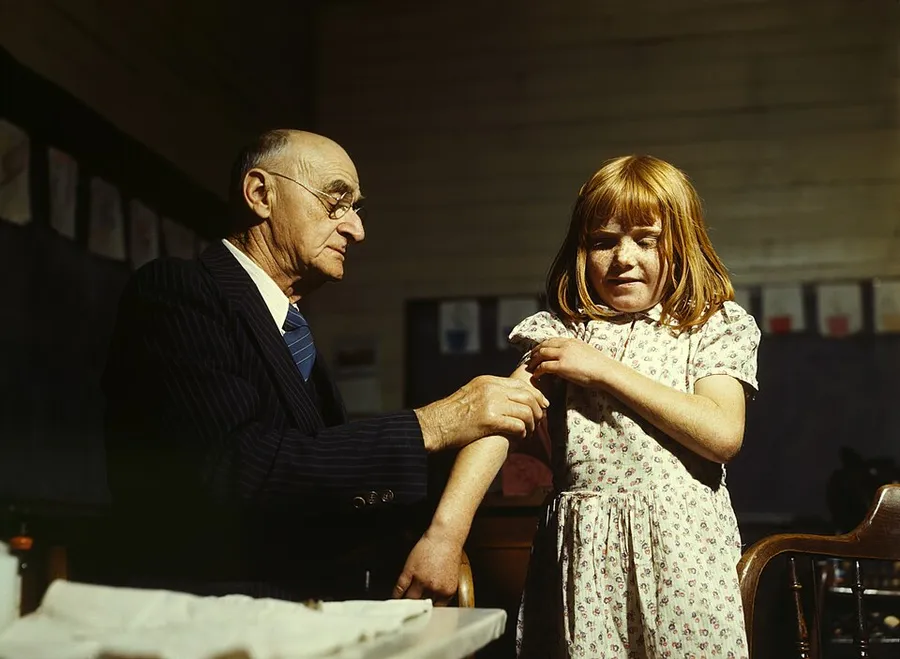
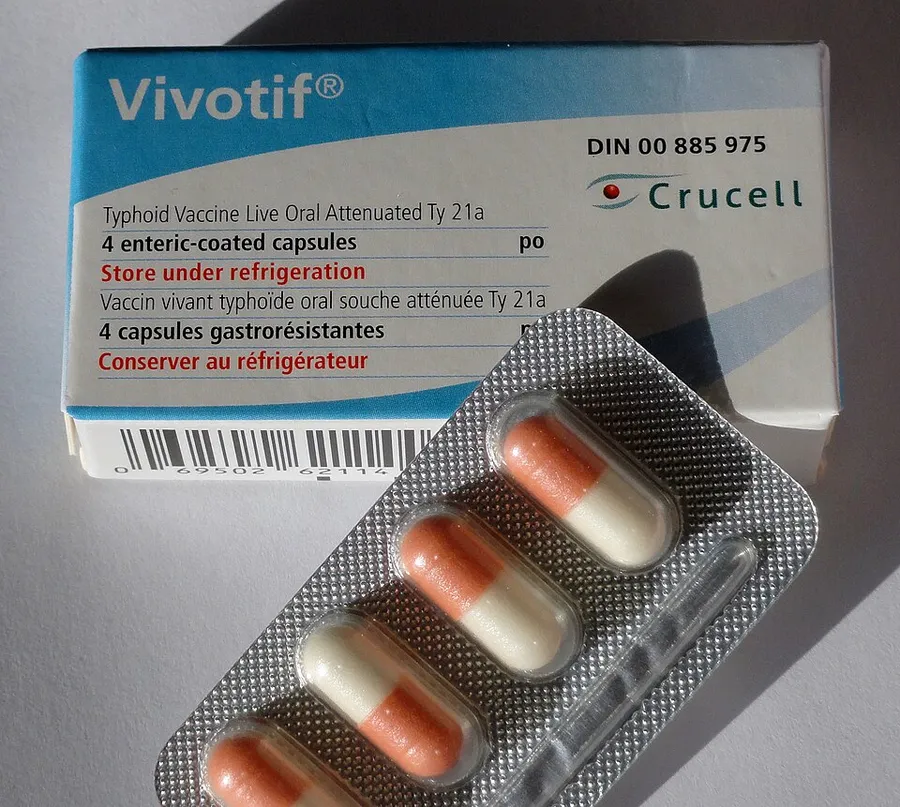
Two typhoid vaccines are licensed for use in the prevention of typhoid: the live, oral Ty21a vaccine (sold as Vivotif by Crucell Switzerland AG) and the injectable typhoid polysaccharide vaccine (sold as Typhim Vi by Sanofi Pasteur and Typherix by GlaxoSmithKline). Both are efficacious and recommended for travelers to areas where typhoid is endemic. Boosters are recommended every five years for the oral vaccine and every two years for the injectable form. An older, killed whole-cell vaccine is still used in countries where the newer preparations are not available, but this vaccine is no longer recommended for use because it has more side effects (mainly pain and inflammation at the site of the injection).
To help decrease rates of typhoid fever in developing nations, the World Health Organization (WHO) endorsed the use of a vaccination program starting in 1999. Vaccination has proven effective at controlling outbreaks in high-incidence areas and is also very cost-effective: prices are normally less than US$1 per dose. Because the price is low, poverty-stricken communities are more willing to take advantage of the vaccinations. Although vaccination programs for typhoid have proven effective, they alone cannot eliminate typhoid fever. Combining vaccines with public health efforts is the only proven way to control this disease.
Since the 1990s, the WHO has recommended two typhoid fever vaccines. The ViPS vaccine is given by injection and the Ty21a by capsules. Only people over age two are recommended to be vaccinated with the ViPS vaccine, and it requires a revaccination after 2–3 years, with a 55–72% efficacy. The Ty21a vaccine is recommended for people five and older, lasting 5–7 years with 51–67% efficacy. The two vaccines have proved safe and effective for epidemic disease control in multiple regions.
A version of the vaccine combined with a hepatitis A vaccine is also available.
Results of a phase 3 trial of typhoid conjugate vaccine (TCV) in December 2019 reported 81% fewer cases among children.
Treatment
Treatment for typhoid fever is most effective if started early.
Oral rehydration therapy
The rediscovery of oral rehydration therapy in the 1960s provided a simple way to prevent many of the deaths of diarrheal diseases in general.
Antibiotics
Where resistance is uncommon, the treatment of choice is a fluoroquinolone such as ciprofloxacin. Otherwise, a third-generation cephalosporin such as ceftriaxone or cefotaxime is the first choice. Cefixime is a suitable oral alternative.
Properly treated, typhoid fever is not fatal in most cases. Antibiotics such as ampicillin, chloramphenicol, trimethoprim-sulfamethoxazole, amoxicillin, and ciprofloxacin have been commonly used to treat it. Treatment with antibiotics reduces the case-fatality rate to about 1%.
Without treatment, some patients develop sustained fever, bradycardia, hepatosplenomegaly, abdominal symptoms, and occasionally pneumonia. In white-skinned patients, pink spots, which fade on pressure, appear on the skin of the trunk in up to 20% of cases. In the third week, untreated cases may develop gastrointestinal and cerebral complications, which may prove fatal in 10–20% of cases. The highest case fatality rates are reported in children under 4. Around 2–5% of those who contract typhoid fever become chronic carriers, as bacteria persist in the biliary tract after symptoms have resolved.
Surgery
Surgery is usually indicated if intestinal perforation occurs. One study found a 30-day mortality rate of 9% (8/88), and surgical site infections at 67% (59/88), with the disease burden borne predominantly by low-resource countries.
For surgical treatment, most surgeons prefer simple closure of the perforation with drainage of the peritoneum. Small bowel resection is indicated for patients with multiple perforations. If antibiotic treatment fails to eradicate the hepatobiliary carriage, the gallbladder should be resected. Cholecystectomy is sometimes successful, especially in patients with gallstones, but is not always successful in eradicating the carrier state because of persisting hepatic infection.
Resistance
As resistance to ampicillin, chloramphenicol, trimethoprim-sulfamethoxazole, and streptomycin is now common, these agents are no longer used as first-line treatment of typhoid fever. Typhoid resistant to these agents is known as multidrug-resistant typhoid.
Ciprofloxacin resistance is an increasing problem, especially in the Indian subcontinent and Southeast Asia. Many centres are shifting from ciprofloxacin to ceftriaxone as the first line for treating suspected typhoid originating in South America, India, Pakistan, Bangladesh, Thailand, or Vietnam. Also, it has been suggested that azithromycin is better at treating resistant typhoid than both fluoroquinolone drugs and ceftriaxone. Azithromycin can be taken by mouth and is less expensive than ceftriaxone, which is given by injection.
A separate problem exists with laboratory testing for reduced susceptibility to ciprofloxacin; current recommendations are that isolates should be tested simultaneously against ciprofloxacin (CIP) and against nalidixic acid (NAL), that isolates sensitive to both CIP and NAL should be reported as "sensitive to ciprofloxacin", and that isolates sensitive to CIP but not to NAL should be reported as "reduced sensitivity to ciprofloxacin". But an analysis of 271 isolates found that around 18% of isolates with reduced susceptibility to fluoroquinolones, the class to which CIP belongs (MIC 0.125–1.0 mg/L), would not be detected by this method.
Epidemiology
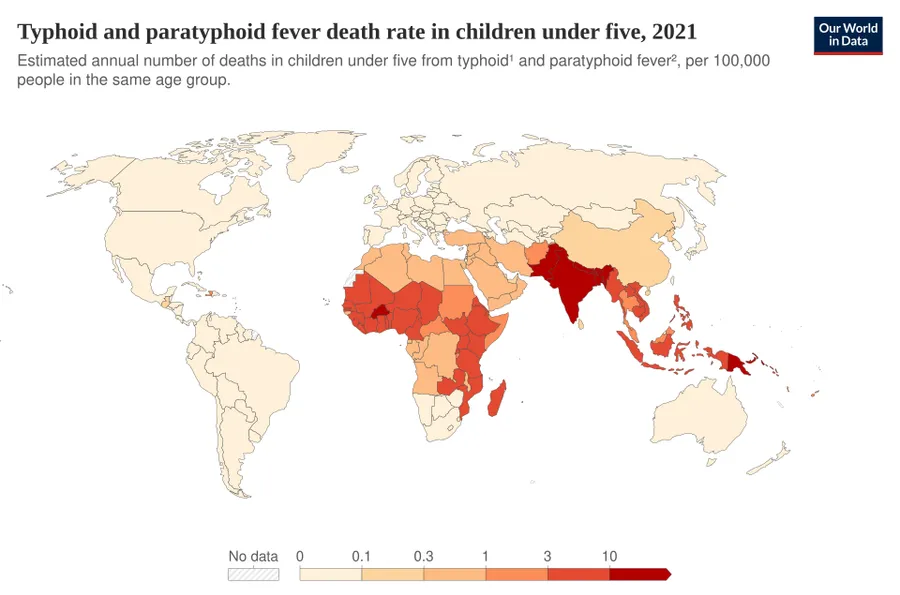
In 2000, typhoid fever caused an estimated 21.7 million illnesses and 217,000 deaths. It occurs most often in children and young adults between 5 and 19 years old. In 2013, it resulted in about 161,000 deaths – down from 181,000 in 1990. Infants, children, and adolescents in south-central and Southeast Asia have the highest rates of typhoid. Outbreaks are also often reported in sub-Saharan Africa and Southeast Asia. In 2000, more than 90% of morbidity and mortality due to typhoid fever occurred in Asia. In the U.S., about 400 cases occur each year, 75% of which are acquired while traveling internationally.
Before the antibiotic era, the case fatality rate of typhoid fever was 10–20%. Today, with prompt treatment, it is less than 1%, but 3–5% of people who are infected develop a chronic infection in the gall bladder. Since S. enterica subsp. enterica serovar Typhi is human-restricted, these chronic carriers become the crucial reservoir, which can persist for decades for further spread of the disease, further complicating its identification and treatment. Lately, the study of S. enterica subsp. enterica serovar Typhi associated with a large outbreak and a carrier at the genome level provides new insight into the pathogenesis of the pathogen.
In industrialized nations, water sanitation and food handling improvements have reduced the number of typhoid cases. Third world nations have the highest rates. People in these areas often lack access to clean water, proper sanitation systems, and proper healthcare facilities. In these areas, such access to basic public-health needs is not expected in the near future.
In 2004–2005, an outbreak in the Democratic Republic of Congo resulted in more than 42,000 cases and 214 deaths. Since November 2016, Pakistan has had an outbreak of extensively drug-resistant (XDR) typhoid fever.
In Europe, a report based on data for 2017 retrieved from The European Surveillance System (TESSy) on the distribution of confirmed typhoid and paratyphoid fever cases found that 22 EU/EEA countries reported a total of 1,098 cases, 90.9% of which were travel-related, mainly acquired during travel to South Asia.
Outbreaks
"Burning Fever" outbreak among indigenous Americans. Between 1607 and 1624, 85% of the population at the James River died from a typhoid epidemic. The World Health Organization estimates the death toll was over 6,000 during this time.
Maidstone, Kent outbreak in 1897–1898: 1,847 patients were recorded to have typhoid fever. This outbreak is notable because it was the first time a typhoid vaccine was deployed during a civilian outbreak. Almoth Edward Wright's vaccine was offered to 200 healthcare providers, and of the 84 individuals who received the vaccine, none developed typhoid whereas 4 who had not been vaccinated became ill.
American army in the Spanish-American war: government records estimate over 21,000 troops had typhoid, resulting in 2,200 deaths.
In 1902, guests at mayoral banquets in Southampton and Winchester, England became ill and four died, including the Dean of Winchester, after consuming oysters. The infection was due to oysters sourced from Emsworth, where the oyster beds had been contaminated with raw sewage.
Jamaica Plain neighborhood, Boston in 1908 – linked to milk delivery. See the history section, "carriers" for further details.
Outbreak in upper-class New Yorkers who employed Mary Mallon – 51 cases and 3 deaths from 1907 to 1915.
Aberdeen, Scotland, in summer 1964 – traced back to contaminated canned beef sourced from Argentina sold in markets. More than 500 patients were quarantined in the hospital for a minimum of four weeks, and the outbreak was contained without any deaths.
Dushanbe, Tajikistan, in 1996–1997: 10,677 cases reported, 108 deaths.
Kinshasa, Democratic Republic of the Congo, in 2004: 43,000 cases and over 200 deaths. A prospective study of specimens collected in the same region between 2007 and 2011 revealed about one-third of samples obtained from patient samples were resistant to multiple antibiotics.
Kampala, Uganda in 2015: 10,230 cases reported.
Source: Wikipedia, The Free Encyclopedia · CC BY-SA 4.0
References
- Typhoid fever — Wikipedia, The Free EncyclopediaText from the Wikipedia article "Typhoid fever" (CC BY-SA 4.0); excerpted. Licence. Retrieved 2026-10-19. Revision used.
Text above is quoted from the listed sources without changes to its meaning. Image credits and licences are shown with each image. Educational information only, not medical advice.
Related conditions
Educational overview, not medical advice. Treatment varies by person and location. Consult a qualified health professional for diagnosis or care. Content and model notes · Privacy information