Malaria
Malaria is a serious disease caused by a parasite. You get it when an infected mosquito bites you. Malaria is a major cause of death worldwide, but it is almost wiped out in the United States. The disease is mostly a problem in developing countries with warm climates. If you travel to these countries, you are at risk. There are four different types of malaria caused by four related parasites. The most deadly type occurs in Africa south of the Sahara Desert.
Malaria symptoms include chills, flu-like symptoms, fever, vomiting, diarrhea, and jaundice. A blood test can diagnose it. It can be life-threatening. However, you can treat malaria with drugs. The type of drug depends on which kind of malaria you have and where you were infected.
Malaria can be prevented. When traveling to areas where malaria is found:
- See your doctor for medicines that protect you
- Wear insect repellent with DEET
- Cover up
- Sleep under mosquito netting
Centers for Disease Control and Prevention
Signs and symptoms
Symptoms during the early stages of malaria infection are fever, chills, headache, nausea and vomiting and diarrhoea; more serious cases may show enlarged spleen or liver and mild jaundice. These symptoms can resemble other conditions such as sepsis, gastroenteritis, flu and other viral diseases. Without treatment, symptoms - particularly the fever - can settle into a regular pattern, recurring every two or three days (paroxysmal attacks).
Symptoms typically begin 10–15 days after the initial mosquito bite, but can occur as late as several months after infection. Travellers taking preventative malaria medications may develop symptoms once they stop taking the drugs.
Severe malaria occurs when the Plasmodium infection causes damage to vital organs such as the kidney, liver, lungs or brain. Symptoms include severe anaemia, jaundice, convulsions, confusion, coma, kidney failure and eventually death. Severe malaria is usually caused by P. falciparum; it should be treated as a medical emergency.
Complications
A unique feature of P. falciparum is its ability to generate adhesive proteins on the surface of infected red blood cells (RBC). Infected RBCs obstruct capillaries (causing hypoxia) and accumulate in vital organs, interfering with their function. P. falciparum infection underlies most severe complications of malaria.
Cerebral malaria is a form of severe malaria affecting the brain. Infected RBCs blocking capillaries in the brain trigger an immune reaction, which in turn damages the blood-brain barrier. Individuals with cerebral malaria exhibit neurological symptoms, such as confusion, seizures, or coma. Cerebral malaria, if untreated, can lead to death within forty-eight hours of the first symptoms; survivors may have long-term neurological damage.
Severe anaemia is caused by a combination of the destruction of RBCs (both infected and uninfected) together with reduced RBC production in the bone marrow; it is a major cause of deaths in children under 5.
Malaria can lead to acute respiratory distress syndrome in up to 25% of cases. It is caused by damage to the capillary endothelium, in turn damaging the alveoli of the lung. Symptoms are extreme shortness of breath and a bluish tinge to the lips (cyanosis) indicating lack of oxygen. It is a leading killer of adults, with around 40% mortality once symptoms begin.
Coinfection of HIV with malaria increases mortality.
Other complications include an enlarged spleen, enlarged liver or both of these. So-called blackwater fever occurs when haemoglobin from lysed red blood cells leaks into and discolours the urine; this often precedes kidney failure.
Malaria during pregnancy can cause stillbirths, infant mortality, miscarriage and low birth weight, particularly in P. falciparum infection, but also with P. vivax.
Cause
Malaria is caused by infection with parasites in the genus Plasmodium, which are transmitted between the human hosts by mosquitoes in the genus Anopheles.
Life cycle
The plasmodium parasite has a complex life cycle involving human and mosquito hosts, taking a different form at each stage of the cycle.
The Anopheles mosquitoes initially get infected by Plasmodium by taking a blood meal from a previously infected person. The next time the mosquito feeds, its bite introduces Plasmodium—in a mobile form called sporozoites—into a new human host.
Within the human host, the sporozoites enter the bloodstream and travel to the liver, where they invade liver cells (hepatocytes).
They grow and divide in the liver, with each infected hepatocyte eventually harboring up to 40,000 parasites. After 5 to 25 days the infected hepatocytes break down, releasing Plasmodium—in a smaller form called merozoites, into the bloodstream.
In the blood, the merozoites rapidly invade individual red blood cells, with each replicating over 24–72 hours to form 16–32 new merozoites. The infected red blood cell bursts, releasing new merozoites which again infect red blood cells, resulting in a cycle that continuously amplifies the number of parasites in an infected person.
A small portion of parasites do not replicate, but instead develop into early sexual stage parasites called male and female gametocytes. These gametocytes develop in the bone marrow for 11 days, then return to the blood circulation to await uptake by the bite of another mosquito.
Once inside a mosquito, the gametocytes undergo sexual reproduction, and eventually form daughter sporozoites that migrate to the mosquito's salivary glands to be injected into a new host when the mosquito next bites.
The liver infection causes no symptoms; all symptoms of malaria result from the infection of red blood cells. Symptoms develop once there are more than around 100,000 parasites per milliliter of blood. Many of the symptoms associated with severe malaria are caused by the tendency of P. falciparum to bind to blood vessel walls, resulting in damage to the affected vessels and surrounding tissue. Parasites sequestered in the blood vessels of the lung contribute to respiratory failure. In the brain, they contribute to coma. During pregnancy they accumulate in the intervillous space and hinder the function of the placenta, contributing to low birthweight and preterm labor, and increasing the risk of abortion and stillbirth. The destruction of red blood cells during infection often results in anaemia, exacerbated by reduced production of new red blood cells during infection.
Only female mosquitoes feed on blood; male mosquitoes feed on plant nectar and do not transmit the disease. Females of the mosquito genus Anopheles prefer to feed at night. They usually start searching for a meal at dusk, and continue through the night until they succeed. However, they may be adapting to the extensive use of bed nets and beginning to bite earlier, before bed-nets are deployed. Malaria parasites can also be transmitted by blood transfusions, although this is rare.
Plasmodium species
In humans, malaria is caused by six Plasmodium species: P. falciparum, P. malariae, P. ovale curtisi, P. ovale wallikeri, P. vivax and P. knowlesi. Among those infected, P. falciparum is the most common species identified (~75%) followed by P. vivax (~20%). P. falciparum is prevalent in Africa and accounts for the majority of deaths, while P. vivax is dominant outside Africa. Some cases have been documented of human infections with several species of Plasmodium from higher apes, but except for P. knowlesi—a zoonotic species that causes malaria in macaques—these are mostly of limited public health importance.
Two species—P. vivax and P. ovale—form a dormant stage called a hypnozoite which can persist in the liver, even after drug treatment has eliminated the infection from the blood. These can reactivate after weeks or months and cause relapse of the disease.
Recurrent malaria
Symptoms of malaria can recur after varying symptom-free periods. Depending upon the cause, recurrence can be classified as either recrudescence, relapse, or reinfection. Recrudescence is when symptoms return after a symptom-free period due to failure to remove blood-stage parasites by adequate treatment. Relapse is when symptoms reappear after the parasites have been eliminated from the blood but have persisted as dormant hypnozoites in liver cells. Reinfection means that parasites were eliminated from the entire body but a new infection has established. Recurrence of infection within two weeks of treatment ending is typically attributed to treatment failure.
Diagnosis
Due to the non-specific nature of malaria symptoms, diagnosis is typically suspected based on symptoms and travel history, then confirmed with a laboratory test to detect the presence of the parasite in the blood (parasitological test). In areas where malaria is common, the World Health Organization (WHO) recommends clinicians suspect malaria in any person who reports having fevers, or who has a current temperature above 37.5 °C without any other obvious cause. Malaria should be suspected in children with signs of anaemia: pale palms or a laboratory test showing haemoglobin levels below 8 grams per deciliter of blood. In areas of the world with little to no malaria, testing is only recommended for people with possible exposure to malaria (typically travel to a malaria-endemic area) and unexplained fever.
Malaria is usually confirmed by the microscopic examination of blood films or by antigen-based rapid diagnostic tests (RDT). Microscopy—i.e., examining Giemsa-stained blood with a light microscope—is the gold standard for malaria diagnosis. Microscopists typically examine both a "thick film" of blood, allowing them to scan many blood cells in a short time, and a "thin film" of blood, allowing them to clearly see individual parasites and identify the infecting Plasmodium species. Under typical field laboratory conditions, a microscopist can detect parasites when there are at least 100 parasites per microliter of blood, which is around the lower range of symptomatic infection. Microscopic diagnosis is relatively resource intensive, requiring trained personnel, specific equipment and a consistent supply of microscopy slides and stains.
Rapid diagnostic tests (RDTs) can be used to confirm a microscopic diagnosis; they are also used in places where microscopy is unavailable. RDTs are fast and easily deployed to places without full diagnostic laboratories. The test detects parasite proteins in a fingerstick blood sample. A variety of RDTs are available, targeting the parasite proteins lactate dehydrogenase, aldolase, or histidine rich protein 2 (HRP2, which is specific to P. falciparum only). The HRP2 test is widely used in Africa, where P. falciparum predominates. However, since HRP2 persists in the blood for up to five weeks after an infection is treated, an HRP2 test sometimes cannot distinguish whether someone currently has malaria or previously had it. Additionally, some P. falciparum parasites lack the HRP2 gene, complicating detection. Rapid tests also cannot quantify the parasite burden in a person, nor the species of Plasmodium involved.
A polymerase chain reaction (PCR) test is the most sensitive method for diagnosing malaria. The test amplifies parasite DNA in blood; it can detect Plasmodium and identify the species, even at very low levels in the blood. It requires specialised laboratory equipment so is rarely available in developing countries; it is generally used in developed world to confirm diagnosis in returning travellers.
In April 2026, WHO prequalified three rapid diagnostic tests designed to detect P. falciparum strains with pfhrp2 deletions, which can evade commonly used HRP2-based tests and cause false-negative results. The new tests target the parasite protein pf-LDH and are recommended where more than 5% of malaria cases are missed because of pfhrp2 deletions.
Treatment
Malaria is treated with antimalarial medications. To ensure a complete cure and prevent the parasite from developing drug resistance, treatment guidelines since 2001 generally require two drugs in combination, with one of them being a derivative of artemisinin and the other a complementary drug. The exact combination of drugs depends on the Plasmodium species involved, the probability of drug resistance, relevant facts from the patient's medical and travel history and any previous use of antimalarials. Treatment regimens in national formularies are generally based on guidelines issued by WHO which are updated regularly.
Several classes of drugs can be used as components of combination therapies. Artemisinin-based drugs include artemether and artesunate. Quinoline derivatives include chloroquine, quinine and mefloquine. Antifolate compounds include pyrimethamine, proguanil and sulfadoxine. Other drugs include lumefantrine, atovaquone, doxycycline and clindamycin.
Malaria is generally classified as either "severe" or "uncomplicated". Symptoms which indicate severe malaria include the following (not a complete list):
Decreased consciousness, coma, convulsions
Kidney failure or haemoglobin in the urine
Acidosis or lactate levels of greater than 5 mmol/L
A high level of parasites visible in a blood smear.
Uncomplicated malaria
Uncomplicated malaria can be treated using oral medication taken for between 3 and 7 days. The drug regimen should be selected according to Plasmodium species, location and patient's history. As an example, the most common first-line treatment for uncomplicated P. falciparum malaria is Artemether-lumefantrine taken orally over three days. In 2026, WHO prequalified the first artemether-lumefantrine formulation specifically developed for newborns and young infants weighing between 2 and 5 kg.
This treatment is not always suitable, so other drug combinations are recommended. Treatment should start as soon as possible after diagnosis, in order to prevent severe symptoms from developing. In case of infection by P. vivax or P. ovale (which form dormant hypnozoites in the liver) treatment should continue for a further 7 to 14 days.
Severe and complicated malaria
Severe malaria is generally caused by P. falciparum; it is almost always fatal if untreated. Even with treatment, the fatality rate is estimated between 13% and 20%, with survivors often facing long term after-effects. The standard treatment is intravenous artesunate, switching to oral medication once the patient is stable. Patients may deteriorate rapidly, therefore making close monitoring, preferably in a high dependency unit, vital.
Pregnancy
Malaria in pregnancy is more likely to be serious, possibly fatal, for both mother and child; pregnant women are three times more likely to develop severe malaria. Some drugs could injure the developing embryo, especially during the first trimester. Special treatment regimens are recommended, which vary according to the trimester and pose minimal risk.
Drug resistance
Drug resistance poses a growing problem in malaria treatment; Plasmodium populations have a high level of genetic diversity and a rapid reproduction rate which enable them to adapt and evade challenges from antimalarials. P. falciparum parasites began to develop resistance to the first synthetic antimalarial, chloroquine, in the 1950s; since then chloroquine resistance has spread to almost the entire range of this species. Resistance to proguanil developed even more rapidly; the drug was introduced in 1948 and resistance began to be noted the next year, in 1949. In 2001, malaria with partial resistance to artemisinin emerged in Southeast Asia; resistance has subsequently spread to parts of Africa. In order to overcome resistance, drugs may be given in combination, in higher doses, or for longer periods; there is an urgent need for new drugs to be brought on line.
Prognosis
When properly treated, people with uncomplicated malaria can usually expect a complete recovery. However, severe malaria can progress extremely rapidly and cause death within hours or days. In the most severe cases of the disease, fatality rates can reach 20%, even with intensive care and treatment.
Malaria has the potential to cause permanent damage to many organs, especially the brain, kidney, liver and spleen. During childhood, malaria causes anaemia during a period of rapid brain development, and also direct brain damage resulting from cerebral malaria. Survivors of cerebral malaria have an increased risk of neurological and cognitive deficits, behavioural disorders and epilepsy.
Prevention
Methods used to prevent malaria include vaccination, prophylactic medication, mosquito elimination and the prevention of bites.
Vaccines
It has proved very difficult to develop an effective malaria vaccine. The parasite has evolved several strategies to evade the human immune response. There are five species of plasmodium; each of these has three life stages in the human host—sporozoite, merozoite and gametocyte. Each stage has different antigens on its surface, meaning that an immune response against one stage is not effective against the others. In addition, genetic variation in the parasites means that the antigens themselves can vary even within a single life stage. As a consequence, natural immunity seems to develop slowly—acquired through multiple infections—is only partial, and is not long lasting. The Malaria Vaccine Technology Roadmap has set a target for new malaria vaccines to have a protective efficacy of at least 75% against clinical malaria.
The first promising vaccine studies into a malaria vaccine were performed in 1967 by immunising mice with live, radiation-attenuated Plasmodium sporozoites, which provided significant protection to the mice upon subsequent injection with normal, viable sporozoites.
In 2013, the WHO and the malaria vaccine funders group set a goal to develop vaccines designed to interrupt malaria transmission with the long-term goal of malaria eradication. As of February 2026, two malaria vaccines have been licensed for use.
The first approved vaccine targeting P. falciparum is RTS,S, known by the brand name Mosquirix, which completed clinical trials in 2014. The WHO adopted a cautious approach to awarding it prequalification and, as part of the Malaria Vaccine Implementation Programme (MVIP) approved pilot programs in three sub-Saharan African countries—Ghana, Kenya and Malawi—starting in 2019. These programs targeted children under 5, who are particularly at risk of severe infection and death. It was approved by the World Health Organization in 2021. Up to 2023, three million children had received the vaccine, showing a significantly reduced incidence of malaria as well as a reduction in childhood mortality (from all causes) of 13%.
The second vaccine is R21/Matrix-M, with a 77% efficacy rate shown in initial trials and significantly higher antibody levels than with the RTS,S vaccine. The R-21/Matrix M malaria vaccine was found to reduce cases of malaria by 75% in areas with seasonal spread and by 68% in areas of year-round spread in children in sub-Saharan Africa. The R-21/Matrix M malaria vaccine was endorsed by the WHO for the prevention of malaria in children in 2023.
Mosquito control
The objective of mosquito control is to stop mosquitoes from biting humans - either by using some forms of barrier, or by reducing mosquito numbers. They can broadly be classified as personal protection, environmental controls outside buildings, indoor measures within houses and buildings, and those incorporated into the fabric of buildings.
Personal protection
Insect repellent, such as DEET or picaridin, is recommended for travellers. Loose clothing that covers most of the body is also recommended. Clothing may be treated with permethrin as an additional safeguard.
Environmental control
Since many mosquitoes breed in standing water, source reduction can be as simple as emptying water from containers around the home, by filling or draining puddles, swampy areas and tree stumps. Eliminating such mosquito breeding areas can be an extremely effective and permanent way to reduce mosquito populations without resorting to insecticides. It is also possible to use larvicides to kill mosquito larvae in pools or puddles that cannot be drained.
Indoors
Insecticide-treated nets (ITNs) and indoor residual spraying (IRS) are effective, have been widely used to prevent malaria, and their use has contributed significantly to reducing the prevalence of malaria in the 21st century. ITNs and IRS may not be sufficient to eliminate the disease, as these interventions depend on how many people use nets, how many gaps in insecticide there are (low coverage areas), if people are not protected when outside of the home, and an increase in mosquitoes that are resistant to insecticides.
Insecticide-treated nets
Mosquito nets help keep mosquitoes away from people and reduce infection rates and transmission of malaria. Nets are not a perfect barrier and are often treated with an insecticide designed to kill the mosquito before it has time to find a way past the net. ITNs are estimated to be twice as effective as untreated nets and offer greater than 70% protection compared with no net.
Most nets are impregnated with pyrethroids, a class of insecticides with low toxicity; they are most effective when used from dusk to dawn. In areas where mosquitoes are resistant to pyrethroids, other ingredients are being combined with pyrethroids in mosquito netting; these include piperonyl butoxide, chlorfenapyr and pyriproxyfen.
UNICEF notes that the use of insecticide-treated nets has been increased since 2000 through accelerated production, procurement and delivery, stating that "almost 2.5 billion ITNs have been distributed globally since 2004, with 2.2 billion (87 per cent) distributed in sub-Saharan Africa". By 2023, 52% of children in sub-Saharan Africa were sleeping under ITNs; however, there were large regional differences in coverage.
A 2025 Malaria Atlas Project analysis estimated that malaria interventions in Africa prevented 1.57 billion cases from 2000 to 2024, with ITNs accounting for 72% of cases averted. The report warned that progress has slowed due to plateauing ITN coverage and emphasized that expanding access to ITNs remains essential.
Indoor residual spraying
Indoor residual spraying (IRS) is the spraying of insecticides on the walls inside a home. After a blood meal (during which it may ingest Plasmodium parasites), the female mosquito rests on a nearby surface while digesting the blood and developing eggs. If the walls of houses have been coated with insecticides, the resting mosquitoes can be killed before they can bite another person. Spraying indoor surfaces does not prevent the mosquito from its first feeding; however, it protects the community as a whole by preventing a second blood meal in which they may pass the infection to a human host. Chemicals recommended by WHO for IRS fall into the following classes:
Pyrethroids such as Alpha-cypermethrin, Bifenthrin
Organochlorides: DDT (very restricted use)
In order to be effective, IRS should be applied to a minimum of 80% of households in a community. It is estimated that IRS has contributed to 10% of the malaria cases averted in parts of Africa.
Structures
To keep mosquitoes from entering the home, screens should be installed on windows and doors and eaves, as well as netting to cover any other sources of ventilation. In 2021, the World Health Organization's (WHO) Guideline Development Group conditionally recommended screening houses in this manner to reduce malaria transmission. Several studies have suggested that screening houses can have a significant effect on malaria transmission. Beyond the protective barrier screening provides, it also does not call for daily behavioral changes in the household. Screening eaves can also have a community-level protective effect, ultimately reducing mosquito-biting densities in neighboring houses that do not have this intervention in place.
Limitations in vector control
As insecticides are used more widely, mosquito populations can evolve resistance, reducing the effectiveness of both long-lasting insecticide-treated nets (LLINs) and indoor residual spraying (IRS). This resistance can occur through physiological mechanisms, in which genetic changes allow mosquitoes to survive insecticide contact. Mosquitoes with these advantageous traits can pass them on to their offspring, increasing the proportion of resistant mosquitoes in the population over time.
Beyond physiological resistance, malaria vectors have demonstrated behavioral adaptations that further reduce the effectiveness of current vector control methods. These changes are termed "behavioral resistance", where mosquito behavior shifts in ways that reduce exposure to insecticides. Anopheles mosquitoes have traditionally exhibited endophagy, meaning they prefer to bite humans indoors, and endophily, meaning they rest indoors after feeding. They also typically bite at night, when individuals are protected by bed nets.
However, some Anopheles species have increasingly been observed biting earlier in the evening or outdoors, exhibiting exophagy, when people are less likely to be protected by bed nets or indoor spraying. They may also rest outdoors rather than on indoor walls that have been sprayed, exhibiting exophily. These behavioral changes contribute to what is known as residual transmission, defined as malaria transmission that persists even after the implementation of core vector control interventions. As a result, malaria transmission can continue even in areas with widespread use of LLINs and IRS.
These adaptations indicate a key limitation of current strategies, which primarily rely on interrupting the human mosquito contact during nighttime indoor feeding. Therefore, incorporating vector behavioral changes into malaria control strategies is increasingly important, as the protective effects of their interventions are being reduced by such adaptations.
Preventive medication
There are a number of medications that can help prevent or interrupt malaria in travellers to places where infection is common; many of these medications are also used in treatment. In places where Plasmodium is resistant to one or more medications, three medications—mefloquine, doxycycline, or the combination of atovaquone/proguanil (Malarone)—are frequently used for prevention.
The protective effect does not begin immediately, and people visiting areas where malaria exists are recommended to start taking the drugs one to two weeks before they arrive, and continue taking them for four weeks after leaving (except for atovaquone/proguanil, which only needs to be started two days before and continued for seven days afterward). Malaria preventative medications are recommended for those vulnerable to the disease. Children under 5-years old, pregnant women, and some experts recommend school age children, in malaria endemic areas are recommended to receive malaria preventative medications on a seasonal basis or intermittent basis. Combining malarial preventative medications with anti-malarial vaccines has a greater effect in reducing malaria case-loads than medications alone.
Intermittent preventive therapy is an intervention that has been used successfully to control malaria in pregnant women and infants, and in preschool children where transmission is seasonal. During pregnancy, medication to prevent malaria has been found to improve the weight of the baby at birth and decrease the risk of anaemia in the mother. Giving antimalarial drugs to infants through intermittent preventive therapy can reduce the risk of having malaria infection, hospital admission and anaemia.
Antimalarial mass drug administration to an entire population at the same time may reduce the risk of contracting malaria in the population. In the 1950s, the WHO included mass drug administration (MDA) of antimalarial drugs as a tool for malaria eradication in exceptional conditions when conventional control techniques have failed. In 1971, the WHO expert committee on malaria still recommended MDA in special circumstances. Subsequently, MDA was linked to the emergence of drug resistance and its overall benefit was questioned.
Others
Community participation and health education strategies promoting awareness of malaria and the importance of control measures have been successfully used to reduce the incidence of malaria in some areas of the developing world. Recognising the disease in the early stages can prevent it from becoming fatal. Education can also inform people to cover over areas of stagnant, still water, such as water tanks that are ideal breeding grounds for the parasite and mosquito, thus cutting down the risk of the transmission between people. This is generally used in urban areas where there are large centers of population in a confined space and transmission would be most likely in these areas.
Epidemiology
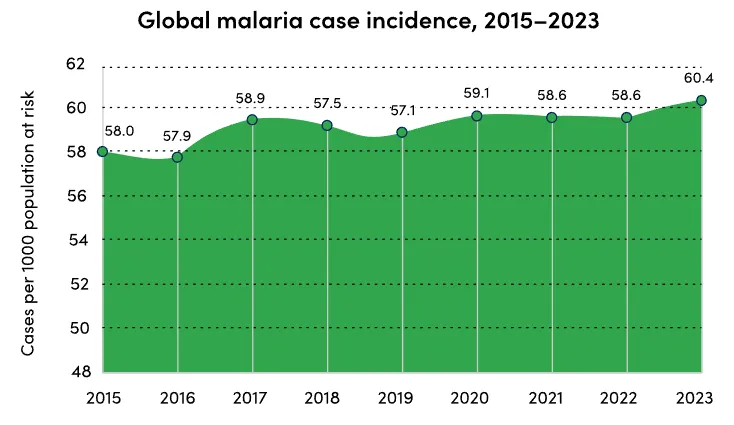
According to the World Health Organization's 2025 World Malaria Report, there were an estimated 282 million new malaria cases globally in 2024, in 80 endemic countries. The number of deaths attributed to malaria stood at 610,000 in 2024. Children under five years old were the most affected, accounting for 75% of malaria deaths in Africa during 2024.
The malaria parasite depends on mosquitoes of the Anopheles genus to transmit between hosts. It is endemic in areas where conditions are favourable for these species of mosquitoes. This includes almost all tropical and subtropical areas of the world, where either regular rainfall creates essential breeding habitats all year, or seasonally during and after rainy seasons when standing water is abundant. The optimum temperature for the parasite is 27 °C (81 °F) but it can develop in temperatures between 20 °C (68 °F) and 40 °C (104 °F). Malaria is uncommon at altitudes above 1,500 meters, where temperatures tend to be lower, and in urban environments where good drainage eliminates pools of water.
Malaria is presently endemic in a broad band around the equator, in areas of the Americas, many parts of Asia and much of Africa. Malaria was once common in parts of Europe and North America, where it is no longer endemic. Anopheles mosquitoes are still present in these areas, so there is a risk of the disease returning.
Since 2015, the WHO European Region has been free of malaria. Travel-related cases still occur occasionally.
The United States eradicated malaria as a major public health concern in 1951. A small number of cases are detected each year, mostly in travellers returning from malaria endemic areas.
The African region continues to bear a disproportionate share of the global malaria burden, accounting for 95% of all cases and 95% of deaths.
Those most at risk of severe malaria if they are exposed to the disease are:
infants & children under 5 years, who have not yet developed immunity to the parasite.
pregnant women, because pregnancy modifies the immune response.
maternal malaria also affects the unborn foetus, leading to premature delivery and low birth weight, a leading cause of infant mortality.
and others with weakened immune system, such as people affected by HIV/AIDS.
Travelers to endemic areas are at risk because they also lack immunity.
Climate change
Climate change is likely to affect malaria transmission, but the degree of effect and the areas affected is uncertain. Greater rainfall in certain areas of India, and following an El Niño event is associated with increased mosquito numbers.
Since 1900 there has been substantial change in temperature and rainfall over Africa. However, factors that contribute to how rainfall results in water for mosquito breeding are complex, incorporating the extent to which it is absorbed into soil and vegetation for example, or rates of runoff and evaporation. Recent research has provided a more in-depth picture of conditions across Africa, combining a malaria climatic suitability model with a continental-scale model representing real-world hydrological processes.
Changes in geographic distribution
Climate change has led to shifts in malaria-endemic regions, with the disease expanding into higher altitudes and previously malaria-free areas. Rising temperatures allow mosquitoes to survive in regions that were once too cold for them, including highland areas in Africa, South America and parts of Asia. A study analyzing malaria cases in Ethiopian and Colombian highlands found a strong correlation between increased temperatures and malaria incidence, demonstrating that climate change has made previously inhospitable areas suitable for transmission.
Increased transmission season
Malaria transmission is highly sensitive to temperature and rainfall patterns. Climate change has led to longer transmission seasons in tropical regions, where mosquitoes can breed year-round due to prolonged periods of high humidity and warm temperatures. Research suggests that in parts of sub-Saharan Africa, the malaria transmission season has lengthened by several months, particularly in regions where warming has pushed temperatures into the optimal range for Plasmodium falciparum development. In regions such as West Africa and parts of India, increasing temperatures and prolonged rainy seasons have contributed to a rise in malaria cases. Some studies predict that by 2050, many malaria-endemic areas will experience a 20–30% increase in transmission duration due to warming trends.
Effects of extreme weather events
Extreme weather events, such as heavy rainfall, flooding and droughts, are increasing in frequency and intensity due to climate change, creating favorable conditions for malaria outbreaks. Flooding provides ideal breeding grounds for mosquitoes by forming stagnant water pools, while droughts can also exacerbate malaria by forcing human populations to store water in open containers, which serve as mosquito habitats. This effect has been observed in parts of sub-Saharan Africa and South Asia, where prolonged drought periods were followed by spikes in malaria cases. A review of malaria outbreaks linked to climate variability found that El Niño events, which increase rainfall and temperatures in malaria-endemic regions, have been associated with significant surges in cases.
Resistance and adaptation of vectors
Higher temperatures accelerate the development of Plasmodium parasites within mosquitoes, potentially leading to increased transmission efficiency. Additionally, rising temperatures and changing environmental conditions have been linked to the spread of insecticide resistance in mosquito populations, complicating malaria control efforts. A global survey found that Anopheles mosquitoes in Africa, Asia and South America have developed increased resistance to commonly used insecticides such as pyrethroids.
Source: Wikipedia, The Free Encyclopedia · CC BY-SA 4.0
References
- Malaria — MedlinePlus, U.S. National Library of MedicineSource: MedlinePlus, National Library of Medicine Public domain (U.S. government work). Retrieved 2026-10-19.
- Malaria — Wikipedia, The Free EncyclopediaText from the Wikipedia article "Malaria" (CC BY-SA 4.0); excerpted. Licence. Retrieved 2026-10-19. Revision used.
Text above is quoted from the listed sources without changes to its meaning. Image credits and licences are shown with each image. Educational information only, not medical advice.
Related conditions
Educational overview, not medical advice. Treatment varies by person and location. Consult a qualified health professional for diagnosis or care. Content and model notes · Privacy information