Male infertility
Infertility is a term doctors use if a man hasn't been able to get a woman pregnant after at least one year of trying. Causes of male infertility include:
- Physical problems with the testicles
- Blockages in the ducts that carry sperm
- Hormone problems
- A history of high fevers or mumps
- Genetic disorders
- Lifestyle or environmental factors
About a third of the time, infertility is because of a problem with the man. One third of the time, it is a problem with the woman. Sometimes no cause can be found.
If you suspect you are infertile, see your doctor. There are tests that may tell if you have fertility problems. When it is possible to find the cause, treatments may include medicines, surgery, or assisted reproductive technology. Happily, many couples treated for infertility are able to have babies.
NIH: National Institute of Child Health and Human Development
Causes
Factors relating to male infertility include:
Immune infertility
Antisperm antibodies (ASA) have been considered as the cause of infertility in around 10–30% of infertile couples. ASA production are directed against surface antigens on sperm, which can interfere with sperm motility and transport through the female reproductive tract, inhibiting capacitation and acrosome reaction, impaired fertilization, influence on the implantation process, and impaired growth and development of the embryo. Risk factors for the formation of antisperm antibodies in men include the breakdown of the blood‑testis barrier, trauma and surgery, orchitis, varicocele, infections, prostatitis, testicular cancer, failure of immunosuppression and unprotected receptive anal or oral sex with men.
Genetics
Chromosomal anomalies and genetic mutations account for nearly 10–15% of all male infertility cases.
Mitochondrial DNA
Mature human sperm contains almost no mitochondrial DNA at all. An increased amount of mitochondrial DNA in the sperm cells has shown to have a negative impact on fertility.
Klinefelter syndrome
One of the most commonly known causes of infertility is Klinefelter syndrome, which affects one in 500–1000 newborn males. Klinefelter syndrome is a chromosomal defect that occurs during gamete formation due to a non-disjunction error during cell division. This results in males having smaller testes, reducing the amount of testosterone and sperm production. Males with this syndrome carry an extra X chromosome (XXY), meaning they have 47 chromosomes compared to the normal 46 in each cell. This extra chromosome directly affects sexual development before birth and during puberty. A variation of Klinefelter syndrome is when some cells in an individual have the extra X chromosome but others do not, referred to as mosaic Klinefelter syndrome. The reduction of testosterone in the male body normally results in an overall decrease in the production of viable sperm for these individuals, thereby making it hard for them to father children without fertility treatment.
Y chromosome deletions
Y chromosomal infertility is a direct cause of male infertility due to its effects on sperm production, occurring in approximately one in 2000 males. Usually, affected men show no symptoms, although they may have smaller testes. Men with this condition may exhibit azoospermia (no sperm production), oligozoospermia (small number of sperm production), or they may produce abnormally shaped sperm (teratozoospermia). This case of infertility occurs during the development of gametes in the male. Where a normal healthy male will have both an X and a Y chromosome, affected males have genetic deletions in the Y chromosome. These deletions affect protein production that is vital for spermatogenesis. Studies have shown that this is an inherited trait; if a male is fathered by a man who also exhibited Y chromosome deletions then this trait will be passed down. These individuals are thereby "Y-linked". Daughters are not affected and cannot be carriers due to their lack of a Y chromosome.
Other
Aneuploidy, an abnormal number of chromosomes
Hypopituitarism in adults, and hypopituitarism untreated in children (resulting in growth hormone deficiency and proportionate dwarfism.)
Acrosomal defects affecting egg penetration
Idiopathic oligospermia – unexplained sperm deficiencies account for 30% of male infertility.
Pre-testicular causes
Pre-testicular factors refer to conditions that impede adequate support of the testes and include situations of poor hormonal support and poor general health including:
Varicocele, a condition of swollen testicle veins with an incidence of 15% in fertile men and about 40% in infertile men. It is present in up to 35% of cases of primary infertility and 69–81% of secondary infertility.
Hypogonadotropic hypogonadism due to various causes
Obesity increases the risk of hypogonadotropic hypogonadism. Animal models indicate that obesity causes leptin insensitivity in the hypothalamus, leading to decreased Kiss1 expression, which, in turn, alters the release of gonadotropin-releasing hormone (GnRH).
Undiagnosed and untreated coeliac disease (CD). Coeliac men may have reversible infertility. Nevertheless, CD can present with several non-gastrointestinal symptoms that can involve nearly any organ system, even in the absence of gastrointestinal symptoms. Thus, the diagnosis may be missed, leading to a risk of long-term complications. In men, CD can reduce semen quality and cause immature secondary sex characteristics, hypogonadism and hyperprolactinaemia, which causes impotence and loss of libido. The giving of gluten free diet and correction of deficient dietary elements can lead to a return of fertility. It is likely that an effective evaluation for infertility would best include assessment for underlying celiac disease, both in men and women.
Strenuous riding (bicycle riding, horseback riding)
Medications, including those that affect spermatogenesis such as chemotherapy, fluoxetine, anabolic steroids, cimetidine, spironolactone; those that decrease FSH levels such as phenytoin; those that decrease sperm motility such as sulfasalazine and nitrofurantoin
Genetic abnormalities such as a Robertsonian translocation
Tobacco smoking
Both first- and second-hand exposure to tobacco and marijuana smoke can damage the testicles and interfere with sperm production. Tobacco contains more than 7000 compounds, of which at least 70 are carcinogenic. Some governments require manufacturers to put warnings on packets.
Cigarette smoke contains both particulate matter such as nicotine and tar and gases such as carbon monoxide (CO). Particulate matter and carbon monoxide are major criteria pollutants, known to have negative effects on male fertility. Nicotine and other components of smoke can cross the blood-testis barrier and harm germ cells and spermatozoa, resulting in decreased measures of sperm health and increases in DNA fragmentation, sperm mutagenesis and genetic abnormalities.
Smoking tobacco increases intake of the heavy metal cadmium, which naturally accumulates in the tobacco plant. When cadmium particles are inhaled, they diffuse from the lungs into the blood stream and circulate throughout the body to various tissues. Cadmium tends to accumulate in the testicles, where it can cause severe structural damage and sperm loss.
Pollutants
Exposure to environmental pollutants in indoor and outdoor air can affect fertility, fetal development, health of offspring in later life, and the genetics of future generations. Common sources of pollutants include tobacco and marijuana smoke and e-cigarettes.; burning of fossil fuels through vehicle use, heating and cooking; cleaning and personal care products; and microplastics. Steps can be taken to minimize exposures such as avoiding smoking, minimizing dust, using glass instead of plastics, carefully selecting cleaning products and personal care products, and avoiding vehicle exhaust fumes and heavy traffic areas.
The criteria air pollutants sulfur dioxide, nitrogen dioxide, particulate matter (PM2.5, PM10), carbon monoxide, O3 and lead have been identified as harmful to human health by the World Health Organization and the U.S. Environmental Protection Agency (EPA) and are known to interfere with reproduction.
A study of counties in China reported a decrease in fertility of 2% for each 10 μg/m3 increase in PM2.5 exposure. PM10, PM2.5 and SO2 have been related to decreased total sperm motility. PM2.5, CO, and O3 exposure were related to decreases in total sperm number. Studies in Turkey, Poland, and California, among others, have linked exposure to particulate matter with decreases in sperm count and motility and increases in abnormal cell development.
Nitric oxide (NO) is essential to the synthesis and secretion of reproductive hormones. In males, highly specific levels of NO are needed to regulate key functions related to sperm motility, hyperactivation, capacitation, and maturation.
As pollutants, nitric oxide (NO) and nitrogen dioxide (NO2) can disrupt these chemically-sensitive activities.
A study in Hefei, China found that sulfur dioxide (SO2) exposure negatively affected progressive motility and total motility of sperm during 0–90 lag days and 70–90 lag days. SO2 exposure also had negative effects on sperm concentration and total sperm number during 10–14 lag days.
Endocrine disruptors include both polycyclic aromatic hydrocarbons (PAHs) such as benzo(a)pyrene (BaP) and heavy metals such as lead (Pb), cadmium (Cd), copper (Cu), zinc (Zn) and mercury (Hg). BaP has been reported to reduce sperm motility and increase sperm abnormalities. This effect increases with exposure. Research has demonstrated that more BaPs were found in men with reported fertility issues compared to men without.
Heavy metals such as lead (Pb) and cadmium (Cd) have been found in semen samples. Exposures to heavy metals are linked to lower sperm density, motility, and sperm counts. Heavy metals are also linked to damage to the physical shape and structure of sperm (sperm morphology) and to sperm DNA fragmentation, making sperm less viable.
DNA damage
Common inherited variants in genes that encode enzymes employed in DNA mismatch repair are associated with increased risk of sperm DNA damage and male infertility. As men age there is a consistent decline in semen quality, and this decline appears to be due to DNA damage. The damage manifests by DNA fragmentation and by the increased susceptibility to denaturation upon exposure to heat or acid, the features characteristic of apoptosis of somatic cells. These findings suggest that DNA damage is an important factor in male infertility.
Epigenetic
An increasing amount of recent evidence has been recorded documenting abnormal sperm DNA methylation in association with abnormal semen parameters and male infertility. Until recently, scientists have thought that epigenetic markers only affect the individual and are not passed down due to not changing the DNA. New studies suggest environmental factors that changed an individual's epigenetic markers can be seen in their grandchildren, one such study demonstrating this through rats and fertility disruptors. Another study bred rats exposed to an endocrine disruptor, observing effects up to generation F5 including decreased sperm motility and decreased sperm count. These studies suggest that environmental factors that influence fertility can be felt for generations even without changing the DNA.
Post-testicular causes
Post-testicular factors decrease male fertility due to conditions that affect the male genital system after testicular sperm production and include defects of the genital tract as well as problems in ejaculation:
Lack of Vas deferens, often related to genetic markers for cystic fibrosis
Infection, e.g. prostatitis, male accessory gland infection
Prevention
Some strategies suggested or proposed for avoiding male infertility include the following:
Avoiding heavy marijuana and alcohol use.
Maintaining optimal frequency of coital activity: sperm counts can be depressed by daily coital activity and sperm motility may be depressed by coital activity that takes place too infrequently (abstinence 10–14 days or more).
Wearing a protective cup and jockstrap to protect the testicles, in any sport such as baseball, football, cricket, lacrosse, hockey, softball, paintball, rodeo, motocross, wrestling, soccer, karate or other martial arts or any sport where a ball, foot, arm, knee or bat can come into contact with the groin.
Diet: Healthy diets (i.e. the Mediterranean diet) rich in such nutrients as omega-3 fatty acids, some antioxidants and vitamins, and low in saturated fatty acids (SFAs) and trans-fatty acids (TFAs) are inversely associated with low semen quality parameters. In terms of food groups, fish, shellfish and seafood, poultry, cereals, vegetables and fruits, and low-fat dairy products have been positively related to sperm quality. However, diets rich in processed meat, soy foods, potatoes, full-fat dairy products, coffee, alcohol and sugar-sweetened beverages and sweets have been inversely associated with the quality of semen in some studies. The few studies relating male nutrient or food intake and fecundability also suggest that diets rich in red meat, processed meat, tea and caffeine are associated with a lower rate of fecundability. This association is only controversial in the case of alcohol. The potential biological mechanisms linking diet with sperm function and fertility are largely unknown and require further study.
Treatment
Treatments vary according to the underlying disease and the degree of the impairment of the male's fertility. Further, in an infertility situation, the fertility of the female needs to be considered.
Pre-testicular conditions can often be addressed by medical means or interventions.
Testicular-based male infertility tends to be resistant to medication. Usual approaches include using the sperm for intrauterine insemination (IUI), in vitro fertilization (IVF), or IVF with intracytoplasmatic sperm injection (ICSI). With IVF-ICSI even with a few sperm pregnancies can be achieved.
Obstructive causes of post-testicular infertility can be overcome with either surgery or IVF-ICSI. Ejaculatory factors may be treatable by medication, or by IUI therapy or IVF.
Vitamin E helps counter oxidative stress, which is associated with sperm DNA damage and reduced sperm motility. A hormone-antioxidant combination may improve sperm count and motility. Giving oral antioxidants to men in couples undergoing in vitro fertilisation for male factor or unexplained subfertility may lead to an increase in the live birth rate but overall the risk of adverse effects is unclear.
Hormonal therapy
Administration of luteinizing hormone (LH) (or human chorionic gonadotropin) and follicle-stimulating hormone (FSH) is very effective in the treatment of male infertility due to hypogonadotropic hypogonadism. Although controversial, off-label clomiphene citrate, an antiestrogen, may also be effective by elevating gonadotropin levels.
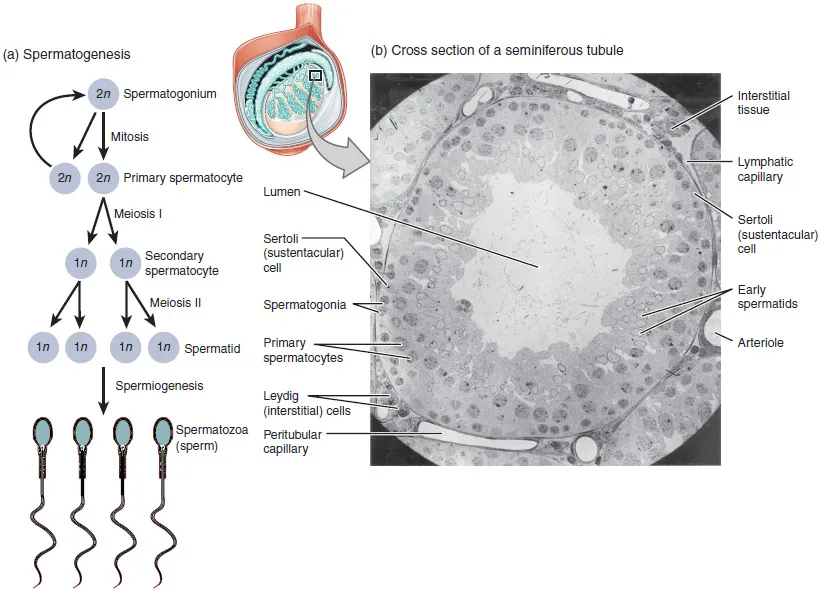
Though androgens are absolutely essential for spermatogenesis and therefore male fertility, exogenous testosterone therapy has been found to be ineffective in benefiting men with low sperm count. This is thought to be because very high local levels of testosterone in the testes (concentrations in the seminiferous tubules are 20- to 100-fold greater than circulating levels) are required to mediate spermatogenesis, and exogenous testosterone therapy (which is administered systemically) cannot achieve these required high local concentrations (at least not without extremely supraphysiological dosages). Moreover, exogenous androgen therapy can actually impair or abolish male fertility by suppressing gonadotropin secretion from the pituitary gland, as seen in users of androgens/anabolic steroids (who often have partially or completely suppressed sperm production). This is because suppression of gonadotropin levels results in decreased testicular androgen production (causing diminished local concentrations in the testes) and because FSH is independently critical for spermatogenesis. In contrast to FSH, LH has little role in male fertility outside of inducing gonadal testosterone production.
Estrogen, at some concentration, has been found to be essential for male fertility/spermatogenesis. However, estrogen levels that are too high can impair male fertility by suppressing gonadotropin secretion and thereby diminishing intratesticular androgen levels. As such, clomiphene citrate (an antiestrogen) and aromatase inhibitors such as testolactone or anastrozole have shown effectiveness in benefiting spermatogenesis.
Low-dose estrogen and testosterone combination therapy may improve sperm count and motility in some men, including in men with severe oligospermia.
Source: Wikipedia, The Free Encyclopedia · CC BY-SA 4.0
References
- Male Infertility — MedlinePlus, U.S. National Library of MedicineSource: MedlinePlus, National Library of Medicine Public domain (U.S. government work). Retrieved 2026-10-19.
- Male infertility — Wikipedia, The Free EncyclopediaText from the Wikipedia article "Male infertility" (CC BY-SA 4.0); excerpted. Licence. Retrieved 2026-10-19. Revision used.
Text above is quoted from the listed sources without changes to its meaning. Image credits and licences are shown with each image. Educational information only, not medical advice.
Related conditions
Educational overview, not medical advice. Treatment varies by person and location. Consult a qualified health professional for diagnosis or care. Content and model notes · Privacy information