Lymphoma
Also called: Hodgkin lymphoma, Non-Hodgkin lymphoma
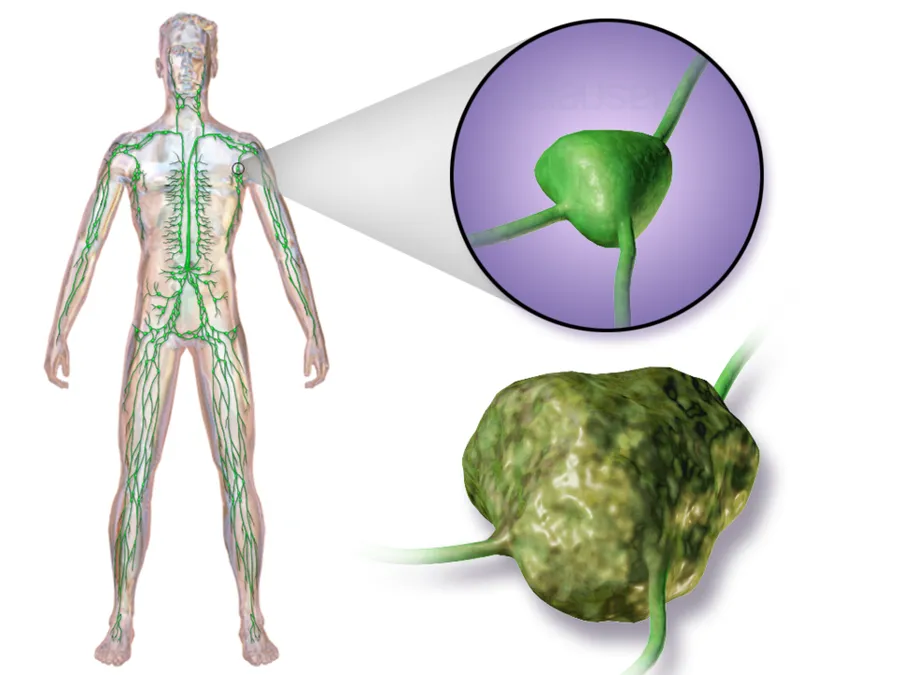
Lymphoma is a cancer of a part of the immune system called the lymph system. There are many types of lymphoma. One type is Hodgkin disease. The rest are called non-Hodgkin lymphomas.
Non-Hodgkin lymphomas begin when a type of white blood cell, called a T cell or B cell, becomes abnormal. The cell divides again and again, making more and more abnormal cells. These abnormal cells can spread to almost any other part of the body. Most of the time, doctors don't know why a person gets non-Hodgkin lymphoma. You are at increased risk if you have a weakened immune system or have certain types of infections.
Non-Hodgkin lymphoma can cause many symptoms, such as:
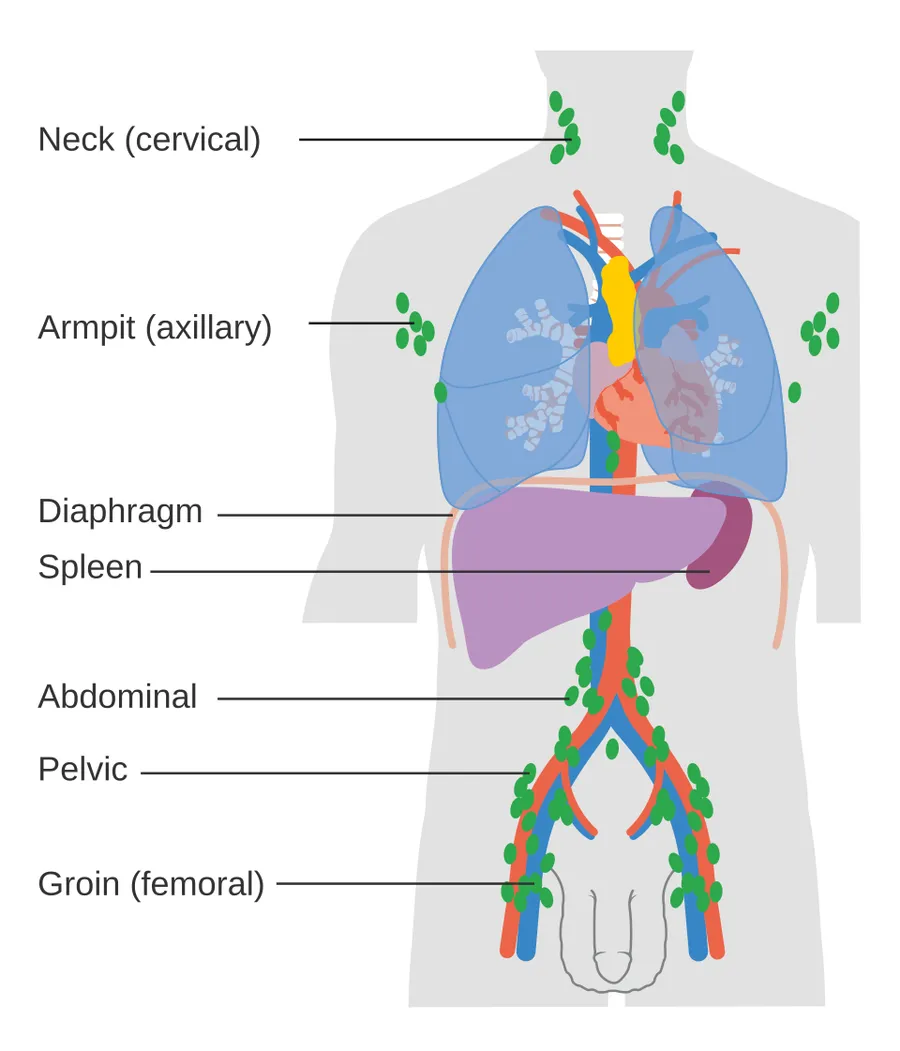
- Swollen, painless lymph nodes in the neck, armpits or groin
- Unexplained weight loss
- Fever
- Soaking night sweats
- Coughing, trouble breathing or chest pain
- Weakness and tiredness that don't go away
- Pain, swelling or a feeling of fullness in the abdomen
Your doctor will diagnose lymphoma with a physical exam, blood tests, a chest x-ray, and a biopsy. Treatments include chemotherapy, radiation therapy, targeted therapy, biological therapy, or therapy to remove proteins from the blood. Targeted therapy uses drugs or other substances that attack specific cancer cells with less harm to normal cells. Biologic therapy boosts your body's own ability to fight cancer. If you don't have symptoms, you may not need treatment right away. This is called watchful waiting.
NIH: National Cancer Institute
Signs and symptoms
Lymphoma commonly presents with painless, persistent lymphadenopathy (swelling of the lymph nodes) and can vary from rapidly enlarging lymph nodes in aggressive lymphomas to fluctuating lymphadenopathy in slow-growing subtypes.
B symptoms are a set of symptoms consisting of fever, night sweats, and unintended weight loss associated with Hodgkin and non-Hodgkin lymphomas. Patients with more advanced stages of lymphoma are more likely to be affected by these symptoms.
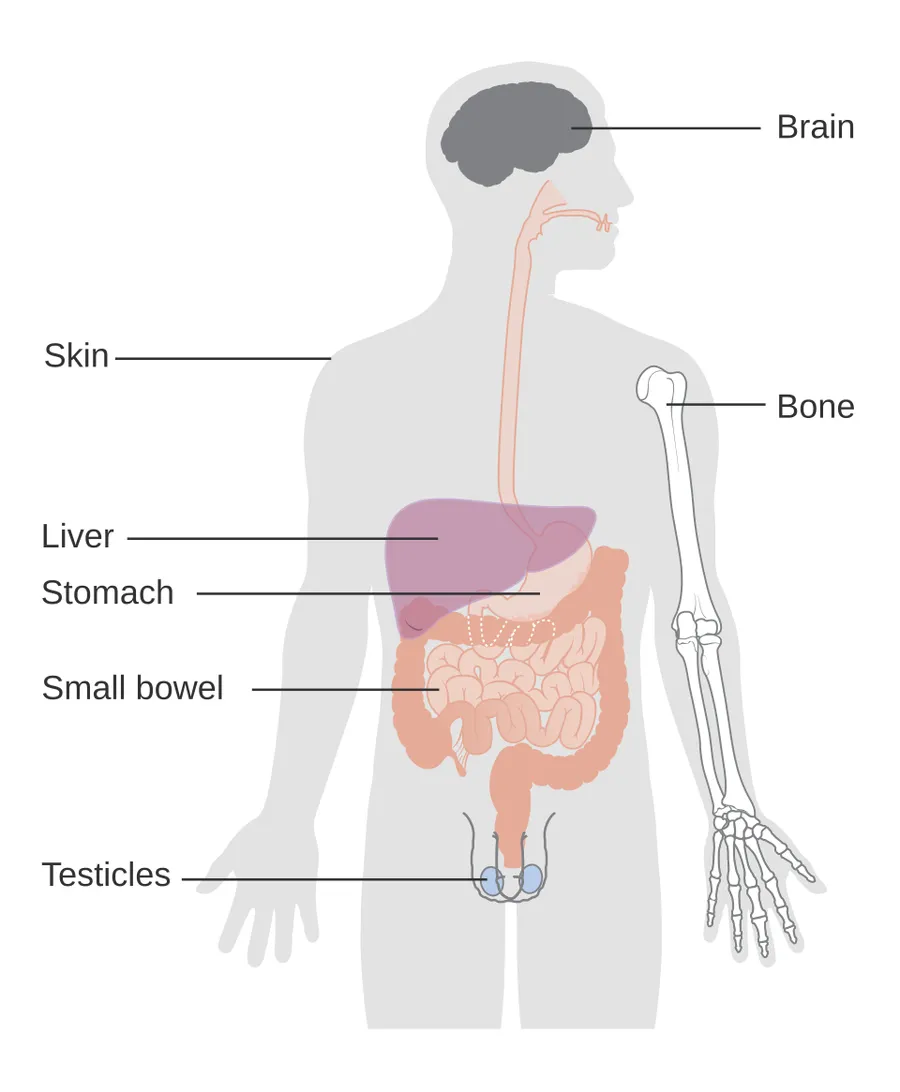
The presence of lymphoma outside the lymph nodes can cause a variety of symptoms depending on the affected organ. Extranodal involvement is common in non-Hodgkin lymphoma, with 40% of patients experiencing some form of it. Aggressive non-Hodgkin lymphomas make systemic symptoms more likely.
Mediastinal lymphadenopathy, and less commonly, pulmonary lymphoma, may cause cough, dyspnea, chest pain, or superior vena cava syndrome, due to compression of the windpipe, the superior vena cava, or nerves in the chest.
Lymphoma in bone marrow can cause anemia, thrombocytopenia, and fatigue. Bone marrow involvement is most common in low-grade, non-Hodgkin lymphomas, and especially in follicular, mantle cell, and small B-cell lymphomas (40-90% of cases depending on subtype).
Chronic pain, fullness, early satiety, and gastrointestinal bleeding are symptoms associated with gastrointestinal lymphoma. The gastrointestinal tract is the most common location for extranodal involvement with non-Hodgkin lymphomas, accounting for 30-40% of extranodal lymphomas in general, while in Hodgkin lymphomas, it is rare, accounting for less than 1% of cases.
Although uncommon, involvement with the central nervous system can cause symptoms including confusion, double vision, headaches, nausea, and hearing loss. It is rare in Hodgkin lymphomas, with only 0.2% to 0.5% of patients experiencing it, but occurs more often in non-Hodgkin lymphoma, ranging from 2.8% in indolent forms to 24.4% in high-grade lymphoblastic and Burkitt lymphoma.
Paraneoplastic syndromes are rare in lymphoma. Paraneoplastic cerebellar degeneration is most strongly associated with Hodgkin lymphomas, while polymyositis and dermatomyositis are associated with both Hodgkin and non-Hodgkin lymphomas.
Diagnosis
Lymphoma is definitively diagnosed by a lymph-node biopsy or biopsy of extranodal tissue, which is examined under the microscope. This examination reveals histopathological features that may indicate lymphoma.
Imaging may be performed as part of the initial workup for lymphoma. CT scans can identify enlarged lymph nodes, while fluorodeoxyglucose (FDG) PET imaging identifies areas of increased lymph node activity.
Laboratory tests may also be used as part of initial workup to assess affected organ function, blood counts, and conditions that may affect treatment. Complete blood counts can show signs of bone marrow, spleen, and GI tract involvement through blood count abnormalities, including anemia, both low and high platelet count, and low white cell count.
Testing for HIV and hepatitis B and C may also be performed due HIV being associated with an increased risk for lymphoma and hepatitis potentially reactivating with certain antibody treatments.
After lymphoma is diagnosed, a variety of tests may be carried out to look for specific features characteristic of different types of lymphoma including immunophenotyping (targeting of proteins expressed on cells), flow cytometry, and fluorescence in situ hybridization testing.
Staging
After a diagnosis and before treatment, cancer is staged. This refers to determining if the cancer has spread, and if so, whether locally or to distant sites. Staging is reported using a scale, from I (confined) to IV (spread). The stage of a lymphoma helps predict a patient's prognosis and is used to help select the appropriate therapy.
The Lugano classification system, a modified version of the older Ann Arbor staging system (from 1971), is the standard used for staging of both HL and NHL.
The specific criteria for each stage are as follows:
The presence of B symptoms (one or more of the following: unintentional loss of 10% body weight in the last 6 months, night sweats, or persistent fever of 38°C or more) or their absence is expressed with a B or A suffix, respectively. This modifier is only used with Hodgkin lymphoma patients, as correlation with prognosis was not found within cases of NHL.
FDG-PET/CT imaging is used for staging fluorodeoxyglucose-avid lymphomas, like Hodgkin lymphoma, while CT scans are used for non-FDG-avid lymphomas, which include some non-Hodgkin subtypes. In Hodgkin lymphoma and some non-Hodgkin lymphomas, like diffuse large B-cell lymphoma, PET/CT can replace bone marrow biopsy.
Differential diagnosis
A variety of infections and conditions can mimic lymphoma, owing to the diverse presentation of lymphoma subtypes, particularly within non-Hodgkin lymphomas. The differential diagnosis varies according to the type of lymphoma and the organs affected within the body.
Hodgkin lymphoma
Hodgkin lymphoma can resemble several other lymphoma subtypes and non-cancerous diseases, including:
Primary mediastinal B-cell lymphoma (sometimes called gray zone lymphoma when features overlap with classical HL)
Non-Hodgkin lymphoma
The differential diagnosis for non-Hodgkin lymphoma varies according to subtype and affected organs. Diseases that present similarly are often other lymphoid disorders, metastatic cancers, infections (especially in aggressive subtypes), and lymphoproliferative disorders, including:
Castleman disease, granulocytic sarcoma, or other lymphoproliferative disorders
Bacterial infections, especially mycobacterial infections
Certain lymphomas (extranodal NK/T-cell lymphoma, nasal type and type II enteropathy-associated T-cell lymphoma) can be mimicked by two benign diseases that involve the excessive proliferation of nonmalignant NK cells in the GI tract, natural killer cell enteropathy, a disease wherein NK cell infiltrative lesions occur in the intestine, colon, stomach, or esophagus, and lymphomatoid gastropathy, a disease wherein these cells' infiltrative lesions are limited to the stomach. These diseases do not progress to cancer, may regress spontaneously, and do not respond to or require chemotherapy or other lymphoma treatments.
Classification
According to the World Health Organization (WHO), lymphoma classification should reflect in which lymphocyte population the neoplasm arises. Thus, neoplasms that arise from precursor lymphoid cells are distinguished from those that arise from mature lymphoid cells. Most mature lymphoid neoplasms comprise the non-Hodgkin lymphomas. Because of their common involvement with lymphoid tissue, mature histiocytic and dendritic cell (HDC) neoplasms were historically discussed alongside mature lymphoid neoplasms, even though they are distinct in cellular origin.
Lymphoma can also spread to the central nervous system, often around the brain in the meninges, known as lymphomatous meningitis (LM).
Hodgkin lymphoma
Hodgkin lymphoma accounts for about 10% of lymphomas. It differs from other forms of lymphomas in its prognosis and several pathological characteristics. A division into Hodgkin and non-Hodgkin lymphomas is used in several of the older classification systems. A Hodgkin lymphoma is marked by the presence of a type of cell called the Reed–Sternberg cell.
Non-Hodgkin lymphomas
Non-Hodgkin lymphomas, which are defined as all lymphomas except Hodgkin lymphoma, are more common than Hodgkin lymphoma. A wide variety of lymphomas are in this class, and the causes, the types of cells involved, and the prognoses vary by type. The number of cases annually of non-Hodgkin lymphoma increases with age. It is further divided into several subtypes.
Epstein–Barr virus-associated lymphoproliferative diseases
Epstein–Barr virus-associated lymphoproliferative diseases are a group of benign, premalignant, and malignant diseases of lymphoid cells (i.e., B cells, T cells, NK cells, and histiocytic-dendritic cells) in which one or more of these cell types is infected with the Epstein–Barr virus (EBV). The virus may be responsible for the development and/or progression of these diseases.
In addition to EBV-positive Hodgkin lymphomas, the World Health Organization (2016) includes the following lymphomas, when associated with EBV infection, in this group of diseases:
WHO classification
The WHO classification, published in 2001 and updated in 2008, 2017, and 2022, is based upon the foundations laid within the "revised European–American lymphoma classification" (REAL). This system groups lymphomas by cell type (i.e., the normal cell type that most resembles the tumor) and defines phenotypic, molecular, or cytogenetic characteristics. The five groups are shown in the table. Hodgkin lymphoma is considered separately within the WHO and preceding classifications, although it is recognized as being a tumor, albeit markedly abnormal, of lymphocytes of mature B cell lineage.
Of the many forms of lymphoma, some are categorized as indolent (e.g., small lymphocytic lymphoma), compatible with a long life even without treatment. Other forms are aggressive (e.g., Burkitt's lymphoma), causing rapid deterioration and death. However, most of the aggressive lymphomas respond well to treatment and are curable. The prognosis, therefore, depends on the correct diagnosis and classification of the disease, which is established after examination of a biopsy by a pathologist (usually a hematopathologist).
Previous classifications
Several previous classifications have been used, including Rappaport, Lennert/Kiel, BNLI, Working Formulation, and REAL.
The Working Formulation of 1982 was a classification of non-Hodgkin lymphoma. It excluded the Hodgkin lymphomas and divided the remaining lymphomas into four grades (low, intermediate, high, and miscellaneous) related to prognosis, with some further subdivisions based on the size and shape of affected cells. This purely histological classification included no information about cell surface markers or genetics and made no distinction between T-cell lymphomas and B-cell lymphomas. It was widely accepted at the time of its publication, but by 2004, it was obsolete.
In 1994, the Revised European-American Lymphoma (REAL) classification applied immunophenotypic and genetic features to identify distinct clinicopathologic entities among all the lymphomas except Hodgkin lymphoma. For coding purposes, the ICD-O (codes 9590–9999) and ICD-10 (codes C81-C96) are available.
Treatment
The treatment of lymphoma changes according to disease subtype, staging, anatomical distribution, and patient factors like age, symptoms, and performance status. For aggressive Hodgkin and non-Hodgkin lymphomas, treatment is often administered with the intent to cure, while treatment for slow-growing non-Hodgkin lymphomas involves more watchful waiting and symptom alleviation.
Treatment may involve a combination of methods, including chemotherapy, radiation therapy, immunotherapy, targeted therapy, hematopoietic stem-cell transplants, or watchful waiting. Advancements in diagnostics have allowed more individual treatment based on lymphoma subtype and patient circumstances.
Hodgkin lymphoma
The management of Hodgkin lymphoma differs from non-Hodgkin subtypes due to its predictable pattern of spreading through the lymphatic system and the presence of Reed-Sternberg cells. The disease is responsive to treatment, with 5-year survival rates exceeding 80% across all stages.
Early-stage disease
Early-stage (I-II) classical Hodgkin lymphoma is generally treated with chemotherapy, commonly using ABVD, paired with involved-site radiotherapy, a radiotherapy technique where only areas directly affected by disease are targeted instead of entire anatomical regions. Increasingly, PET imaging has been used to adapt regimens based on the patient's response to treatment, allowing for a transition to BEACOPP or other treatments in unfavourable progression. Classifying patients based on initial risk has also been used to make modifications in treatment.
Late-stage disease
Treatments for advanced-stage (III-IV) Hodgkin lymphoma have gone through significant development since the late 2010s, with the standard of care expanding from ABVD to include therapies incorporating brentuximab vedotin, an antibody-drug conjugate that targets CD30 proteins expressed on Reed-Sternberg cells, combined with doxorubicin, vinblastine, and dacarbazine (BV-AVD). Following its 2026 FDA approval, nivolumab, an immune checkpoint inhibitor that promotes T-cell anti-tumor activity by targeting the PD-1 receptor, has been used in first-line treatment with the same chemotherapy regimen (N-AVD).
Refractory or relapsed disease
Patients with refractory or relapsed Hodgkin lymphoma are often treated with salvage chemotherapy followed by hematopoietic stem-cell transplantation, with around 50% of relapsed patients being cured. In patients where relapse occurs after stem-cell transplantation, brentuximab vedotin and PD-1 inhibitors are viable options for treatment, and have been shown to reduce relapse risk.
Non-Hodgkin lymphoma
Non-Hodgkin lymphoma encompasses over 80 distinct diseases, with treatments varying according to subtype and clinical behaviour, broadly divided into indolent and aggressive lymphomas. Outcomes of treatment are varied, with 5-year overall survival ranging from 60-90% depending on patient risk and subtype of lymphoma.
Aggressive disease
Aggressive B-cell lymphomas, like diffuse large B-cell lymphoma (DLBCL) and high-grade B-cell lymphoma, are typically treated with combination chemotherapy, with the goal of complete cure. The most common regimen is rituximab, an immunotherapy that targets the CD20 protein expressed on B-cells, combined with CHOP chemotherapy (R-CHOP), which has been the first-line standard for over 20 years.
Polatuzumab vedotin, an antibody-drug conjugate that targets the CD79b protein on B-cells to deliver monomethyl auristatin E, was introduced as an alternative to R-CHOP following FDA approval in 2023, through the Pola-R-CHP regimen, where it replaces the mitotic inhibitor, vincristine (Oncovin).
Indolent disease
Localised indolent lymphomas, especially stage I follicular lymphoma, may be treated with involved-site radiotherapy, with the intent to cure. 5-year overall survival for both early-stage follicular and marginal zone lymphoma treated with radiotherapy have been reported to exceed 85%. Rituximab, both with and without chemotherapy, is also an accepted alternative for patients where radiotherapy is unavailable as a treatment.
Contrary to localised disease, advanced-stage indolent lymphomas are often treated with watchful waiting when patients are asymptomatic and have a low tumour burden, as early treatment has not been shown to improve overall survival. Treatment is indicated following development of symptoms or high tumor burden.
When initiated, standard treatment includes rituximab with bendamustine, an alkylating chemotherapeutic agent with DNA-damaging properties, however, combinations of rituximab and other chemotherapies are used as well.
In other lymphomas, like chronic lymphocytic leukemia/small lymphocytic lymphoma (CLL/SLL), Bruton's tyrosine kinase (BTK) inhibitors, a targeted therapy that prevents B-cells from growing by blocking B-cell receptor signalling, are widely used as standard chemotherapy-free treatments.
Relapsed or refractory disease
With the advent of targeted therapy and immunotherapy-based treatments, treatment of relapsed and refractory non-Hodgkin lymphoma has increasingly incorporated modalities beyond salvage chemotherapy and stem-cell transplantation.
Chimeric antigen receptor-modified (CAR) T-cell therapy has become part of the standard of care in refractory B-cell lymphomas, where, through the genetic modification of patient T-cells, CD19 proteins on B cells are targeted to release cytotoxins in tumor cells. Remission rates have improved with the introduction of CAR T-cell therapy, with 31% of patients remaining progression-free at 5 years and a complete remission rate of 59% in comparison to 40% complete remission and 25% progression-free survival rate with prior treatments.
Bispecific antibodies, an immunotherapy that binds to two proteins simultaneously (CD20 on lymphoma cells, CD3 on T-cells) to direct T cells to target B cells, have also demonstrated efficacy in relapsed diffuse large B-cell lymphoma and follicular lymphoma and provided alternative treatment options for patients, including those ineligible for CAR-T therapy. Response rates range from 25-40% in diffuse large B-cell lymphoma, and 60-75% in follicular lymphoma.
For refractory or relapsed mantle cell lymphoma, BCL-2 inhibitors, like venetoclax, and BTK inhibitors block signalling pathways, inducing apoptosis with a 21% complete response rate.
Palliative care
Palliative care, a specialized medical care focused on the symptoms, pain, and stress of a serious illness, is recommended by multiple national cancer treatment guidelines as an accompaniment to curative treatments for people with lymphoma. It is used to address both the direct symptoms of lymphoma and many unwanted side effects that arise from treatments. Palliative care can be especially helpful for children who develop lymphoma, helping both children and their families deal with the physical and emotional symptoms of the disease. For these reasons, palliative care is especially important for people requiring bone marrow transplants.
Supportive treatment
Adding physical exercises to the standard treatment for adult patients with haematological malignancies like lymphomas may result in little to no difference in mortality, quality of life, and physical functioning. These exercises may result in a slight reduction in depression. Furthermore, aerobic physical exercises probably reduce fatigue. The evidence is very uncertain about the effect on anxiety and serious adverse events.
Epidemiology
Between 1990 and 2021, Lymphoma was the most common form of hematological malignancy, or "blood cancer", in the developed world.
Taken together, lymphomas represent 5.3% of all cancers (excluding simple basal cell and squamous cell skin cancers) in the United States and 55.6% of all blood cancers.
According to the U.S. National Institutes of Health, lymphomas account for about 5%, and Hodgkin lymphoma in particular accounts for less than 1% of all cases of cancer in the United States.
Because the whole lymphatic system is part of the body's immune system, people with a weakened immune system, such as from HIV infection or certain drugs or medications, also have a higher number of cases of lymphoma.
Source: Wikipedia, The Free Encyclopedia · CC BY-SA 4.0
References
- Lymphoma — MedlinePlus, U.S. National Library of MedicineSource: MedlinePlus, National Library of Medicine Public domain (U.S. government work). Retrieved 2026-10-19.
- Lymphoma — Wikipedia, The Free EncyclopediaText from the Wikipedia article "Lymphoma" (CC BY-SA 4.0); excerpted. Licence. Retrieved 2026-10-19. Revision used.
Text above is quoted from the listed sources without changes to its meaning. Image credits and licences are shown with each image. Educational information only, not medical advice.
Related conditions
Educational overview, not medical advice. Treatment varies by person and location. Consult a qualified health professional for diagnosis or care. Content and model notes · Privacy information