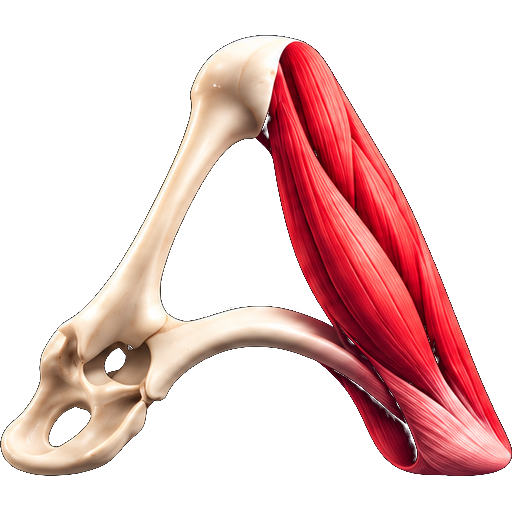
Pronator quadratus
M. pronator quadratus
View the pronator quadratus in 3DPronator quadratus is a square-shaped muscle on the distal forearm that acts to pronate (turn so the palm faces downwards) the hand.
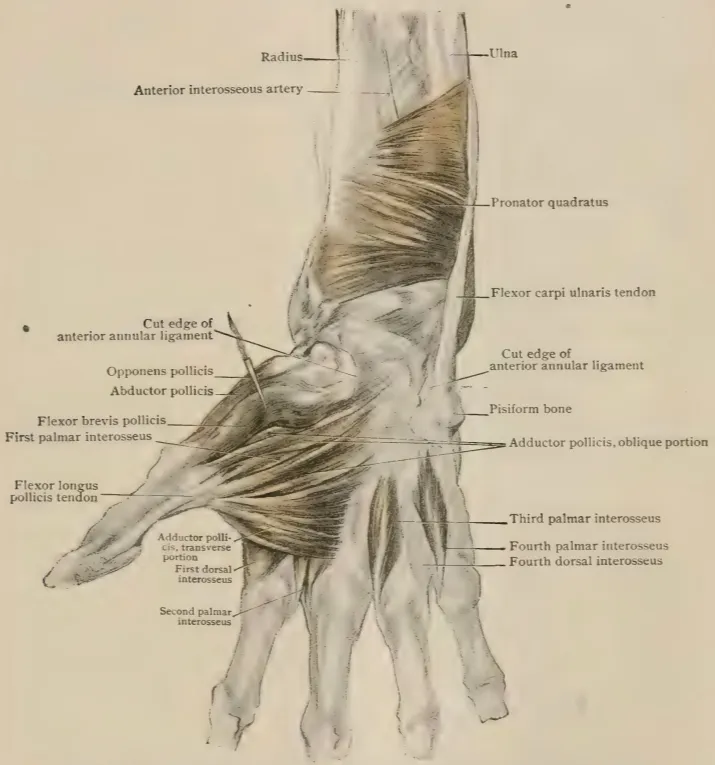
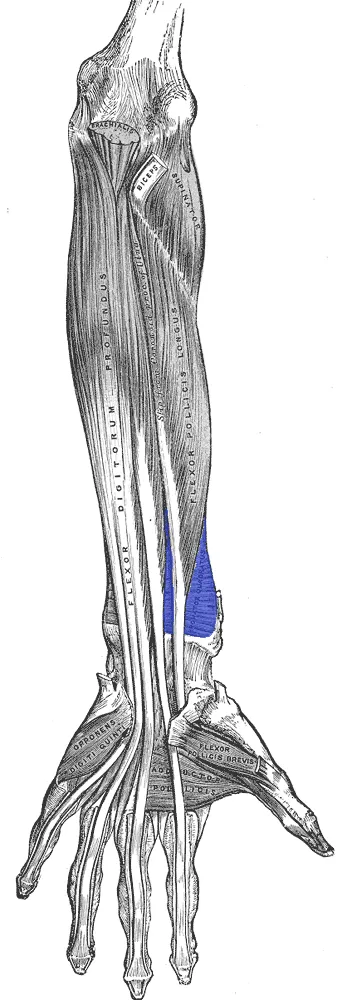
Structure
Its fibres run perpendicular to the direction of the arm, running from the most distal quarter of the anterior ulna to the distal quarter of the radius. It has two heads: the superficial head originates from the anterior distal aspect of the diaphysis (shaft) of the ulna and inserts into the anterior distal diaphysis of the radius, as well as its anterior metaphysis. The deep head has the same origin, but inserts proximal to the ulnar notch. It is the only muscle that attaches only to the ulna at one end and the radius at the other end. Arterial blood comes via the anterior interosseous artery.
Innervation
Pronator quadratus muscle is innervated by the anterior interosseous nerve, a branch of the median nerve.
Function
When pronator quadratus contracts, it pulls the lateral side of the radius towards the ulna, thus pronating the hand. Its deep fibers serve to keep the two bones in the forearm bound together. Moreover, this muscle can be absent in some humans, however, that does not affect the action of pronation very notably, as the pronator teres does the major role in that action.
Source: Wikipedia, The Free Encyclopedia · CC BY-SA 4.0
References
- Pronator quadratus muscle — Wikipedia, The Free EncyclopediaText from the Wikipedia article "Pronator quadratus muscle" (CC BY-SA 4.0); excerpted. Licence. Retrieved 2026-10-19. Revision used.
Text above is quoted from the listed sources without changes to its meaning. Image credits and licences are shown with each image. Educational information only, not medical advice.
Educational anatomy reference, not medical advice. About this content.