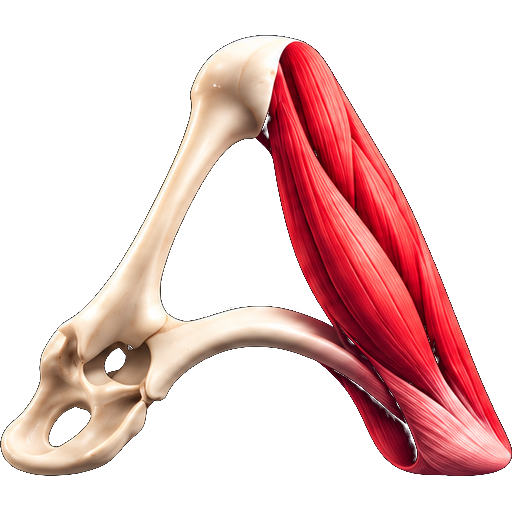
Flexor carpi ulnaris
M. flexor carpi ulnaris
View the flexor carpi ulnaris in 3DThe flexor carpi ulnaris (FCU) is a muscle of the forearm that flexes and adducts at the wrist joint.
Origin
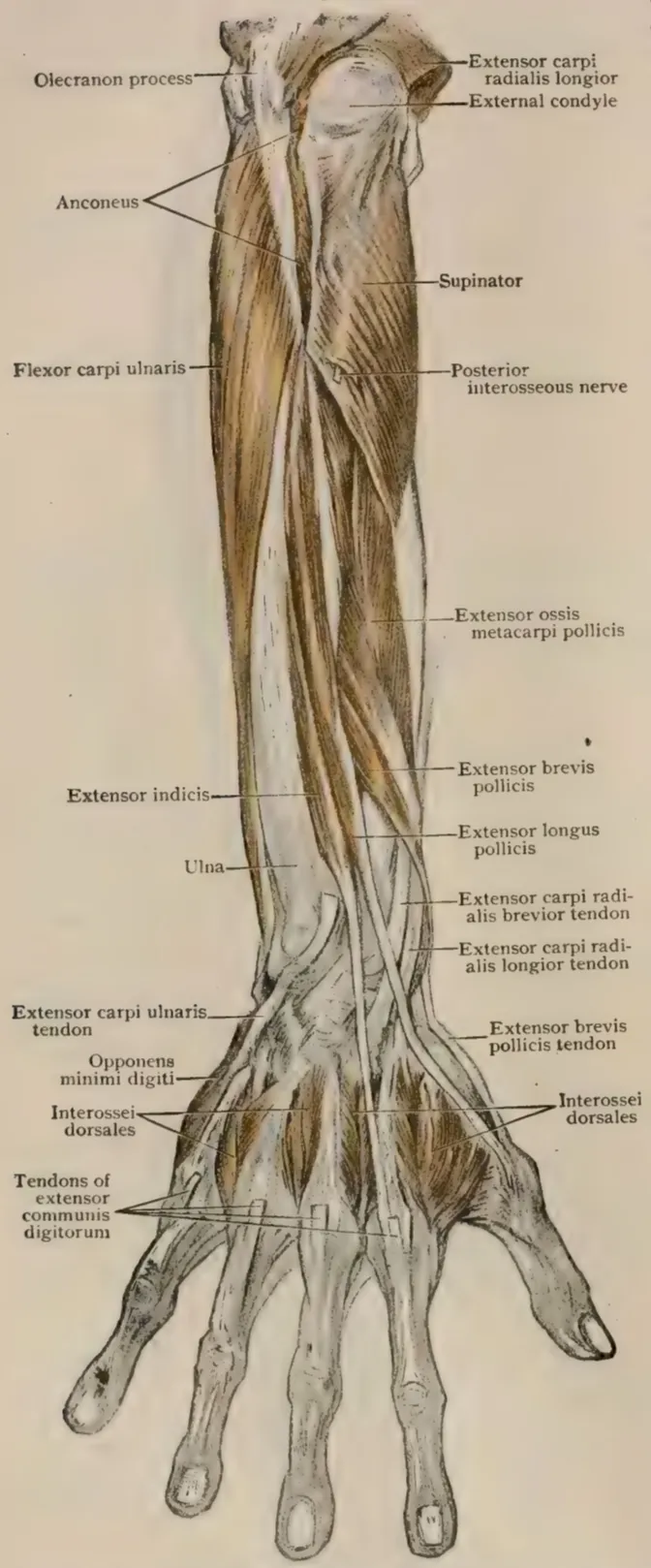
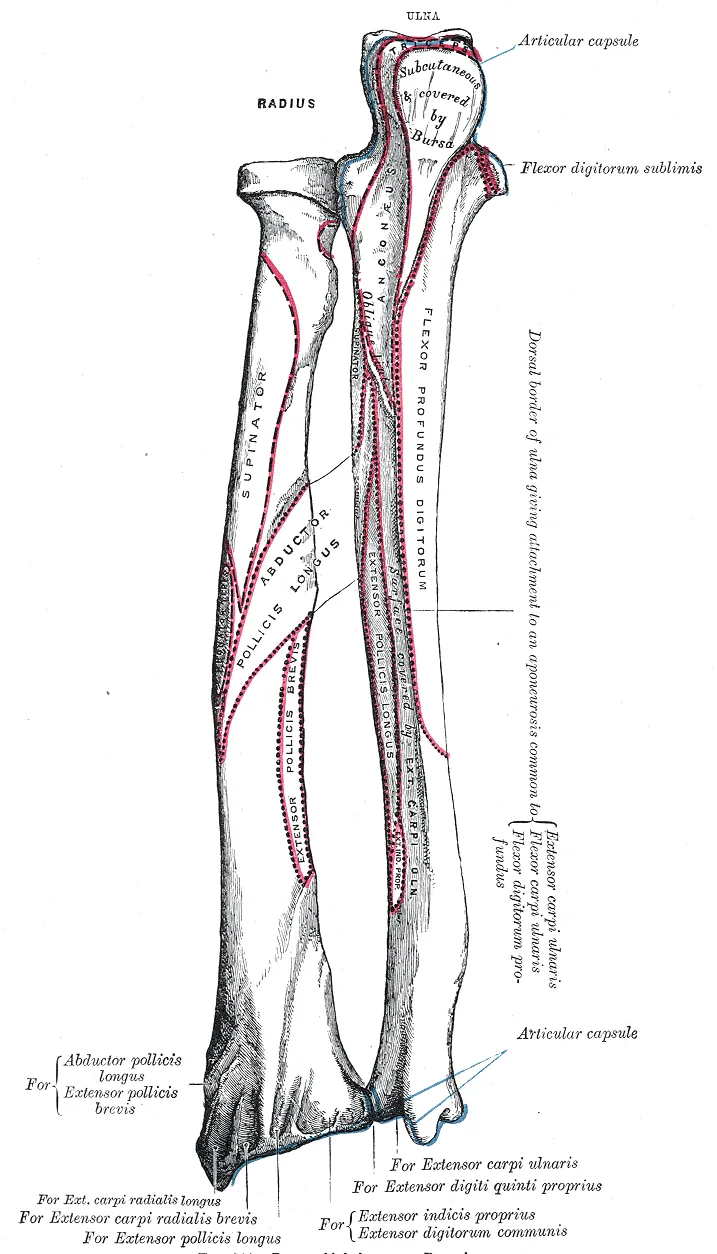
The flexor carpi ulnaris has two heads; a humeral head and ulnar head. The humeral head originates from the medial epicondyle of the humerus via the common flexor tendon. The ulnar head originates from the medial margin of the olecranon of the ulna and the upper two-thirds of the dorsal border of the ulna by an aponeurosis. Between the two heads passes the ulnar nerve and ulnar artery.
Insertion
The flexor carpi ulnaris inserts onto the pisiform, hook of the hamate (via the pisohamate ligament) and the anterior surface of the base of the fifth metacarpal (via the pisometacarpal ligament).
Action
The flexor carpi ulnaris flexes and adducts at the wrist joint.
Innervation
The flexor carpi ulnaris is innervated by the ulnar nerve. The corresponding spinal nerves are C8 and T1.
Tendon
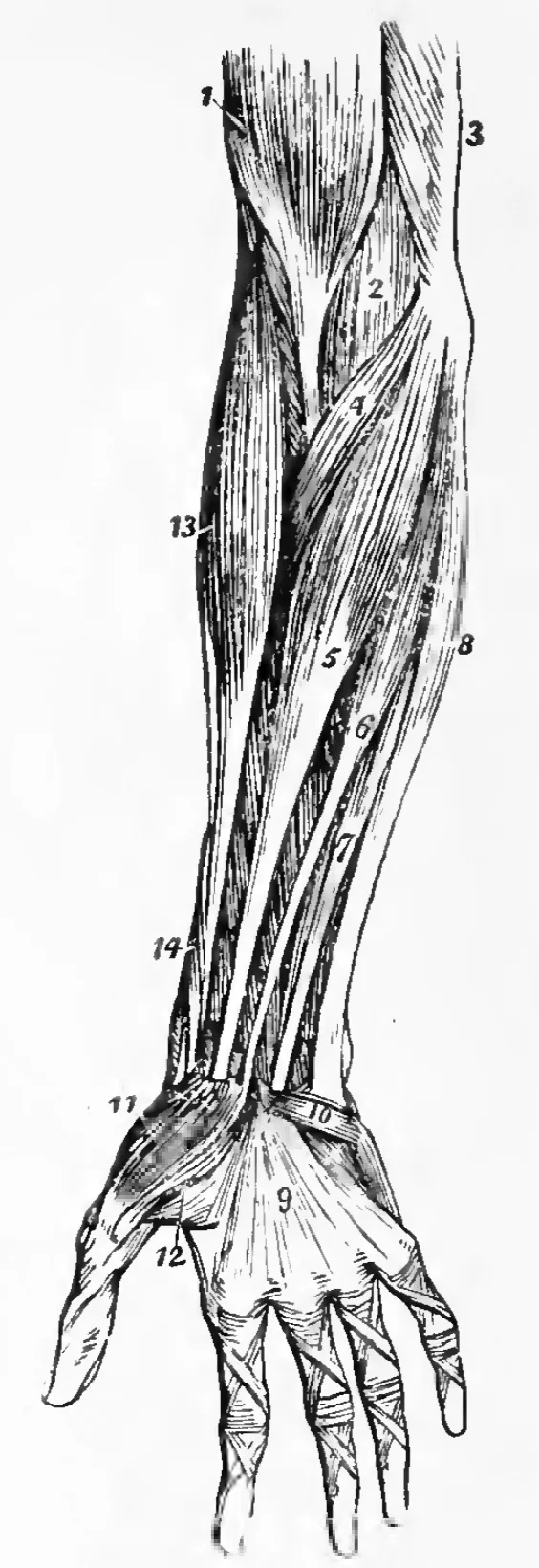
The tendon of flexor carpi ulnaris can be seen on the anterior surface of the distal forearm. On a person's distal forearm, just before the wrist, there are typically three tendons. The tendon of the flexor carpi ulnaris is the most medial (closest to the little finger) of these. The most lateral one is the tendon of flexor carpi radialis muscle, and the middle one is the tendon of palmaris longus (the most prominent one, according to Gray's Anatomy).
Function
The muscle, like all flexors of the forearm, can be strengthened by exercises that resist its flexion. A wrist roller can be used and wrist curls with dumbbells can also be performed. These exercises are used to prevent injury to the ulnar collateral ligament of elbow joint.
Clinical significance
Ulnar entrapment by the aponeurosis of the two heads of the flexor carpi ulnaris muscle may cause cubital tunnel syndrome.
The tendon of flexor carpi ulnaris can be used for tendon transfer.
Source: Wikipedia, The Free Encyclopedia · CC BY-SA 4.0
References
- Flexor carpi ulnaris muscle — Wikipedia, The Free EncyclopediaText from the Wikipedia article "Flexor carpi ulnaris muscle" (CC BY-SA 4.0); excerpted. Licence. Retrieved 2026-10-19. Revision used.
Text above is quoted from the listed sources without changes to its meaning. Image credits and licences are shown with each image. Educational information only, not medical advice.
Educational anatomy reference, not medical advice. About this content.