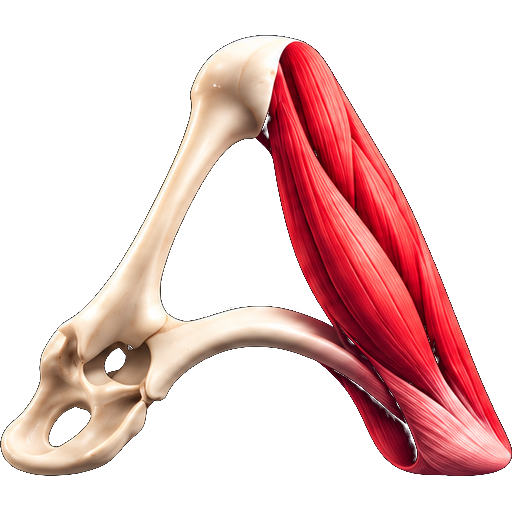
Rhomboid major
M. rhomboideus major
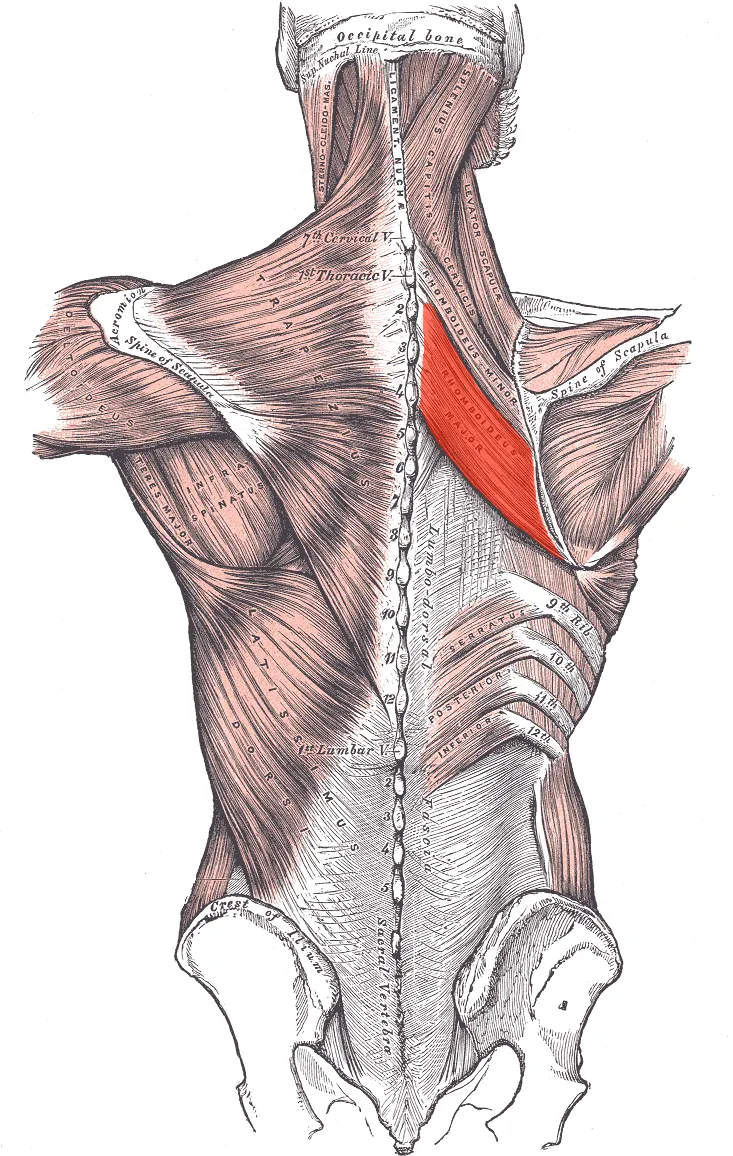
View the rhomboid major in 3DThe rhomboid major is a skeletal muscle of the back that connects the scapula with the vertebrae of the spinal column. It originates from the spinous processes of the thoracic vertebrae T2–T5 and supraspinous ligament; it inserts onto the lower portion of the medial border of the scapula. It acts together with the rhomboid minor to keep the scapula pressed against thoracic wall and to retract the scapula toward the vertebral column.
As the word rhomboid suggests, the rhomboid major is diamond-shaped. The major in its name indicates that it is the larger of the two rhomboids.
Origin
The rhomboid major arises from the spinous processes of the thoracic vertebrae T2–T5 as well as the supraspinous ligament.
Insertion
It inserts on the medial border of the scapula, from about the level of the scapular spine to the scapula's inferior angle.
Innervation
The rhomboid major, like the rhomboid minor, is innervated by the ventral primary ramus via the dorsal scapular nerve (C5).
Blood supply
Both rhomboid muscles also derive their arterial blood supply from the dorsal scapular artery.
Relations
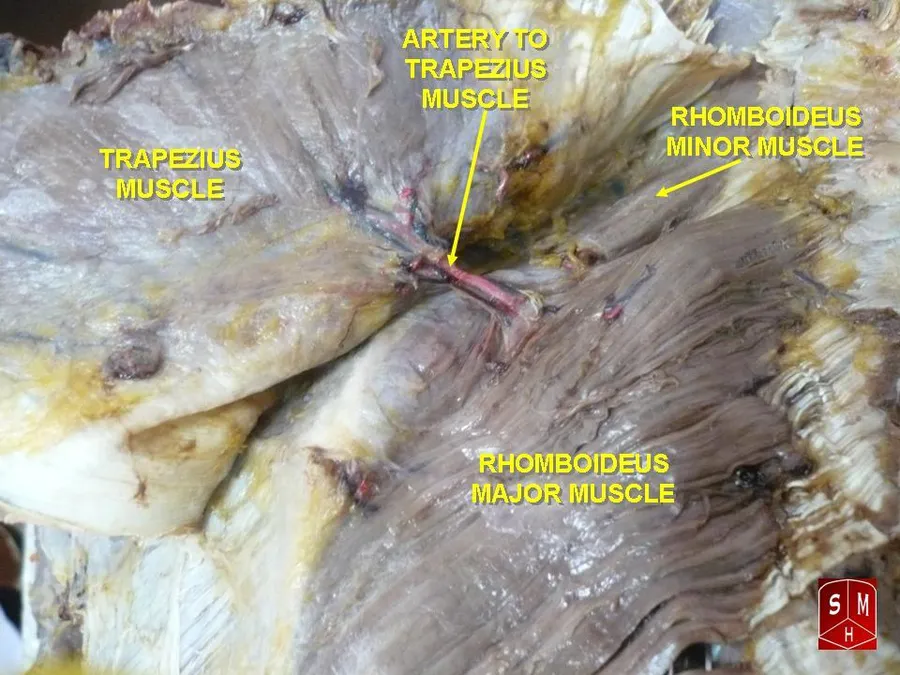
The rhomboid major is considered a superficial back muscle. It is deep to the trapezius, and situated directly inferior to the rhomboid minor.
Variation
The two rhomboids are sometimes fused into a single muscle.
Function
The rhomboid major helps to hold the scapula (and thus the upper limb) onto the ribcage. Other muscles that perform this function include the serratus anterior and pectoralis minor.
Both rhomboids (major and minor) also act to retract the scapula, pulling it towards the vertebral column.
The rhomboids work collectively with the levator scapulae muscles to elevate the medial border of the scapula, downwardly rotating the scapula with respect to the glenohumeral joint. Antagonists to this function (upward rotators of the scapulae) are the serratus anterior and lower fibers of the trapezius. If the lower fibers are inactive, the serratus anterior and upper trapezius work in tandem with rhomboids and levators to elevate the entire scapula.
Clinical significance
If the rhomboid major is torn, wasted, or unable to contract, scapular instability may result. The implications of scapular instability caused by the rhomboid major include scapular winging during scapular protraction, excessive lateral rotation and depression of the scapula, as the antagonistic action by the rhomboid major is absent. With scapular instability, movement in the upper extremity is limited as the scapula cannot guide the desired movement of the arm and shoulders. Pain, discomfort, and limited range of motion of the shoulder are possible implications of scapular instability.
Treatment for scapular instability may include surgery followed by physical therapy or occupational therapy. Physical therapy may consist of stretching and endurance exercises of the shoulder. Pilates and yoga have been also suggested as potential treatment and prevention of scapular instability.
Source: Wikipedia, The Free Encyclopedia · CC BY-SA 4.0
References
- Rhomboid major muscle — Wikipedia, The Free EncyclopediaText from the Wikipedia article "Rhomboid major muscle" (CC BY-SA 4.0); excerpted. Licence. Retrieved 2026-10-19. Revision used.
Text above is quoted from the listed sources without changes to its meaning. Image credits and licences are shown with each image. Educational information only, not medical advice.
Educational anatomy reference, not medical advice. About this content.