Incus
Incus sinistrum
- Paired structure: one on the left and one on the right side of the body.
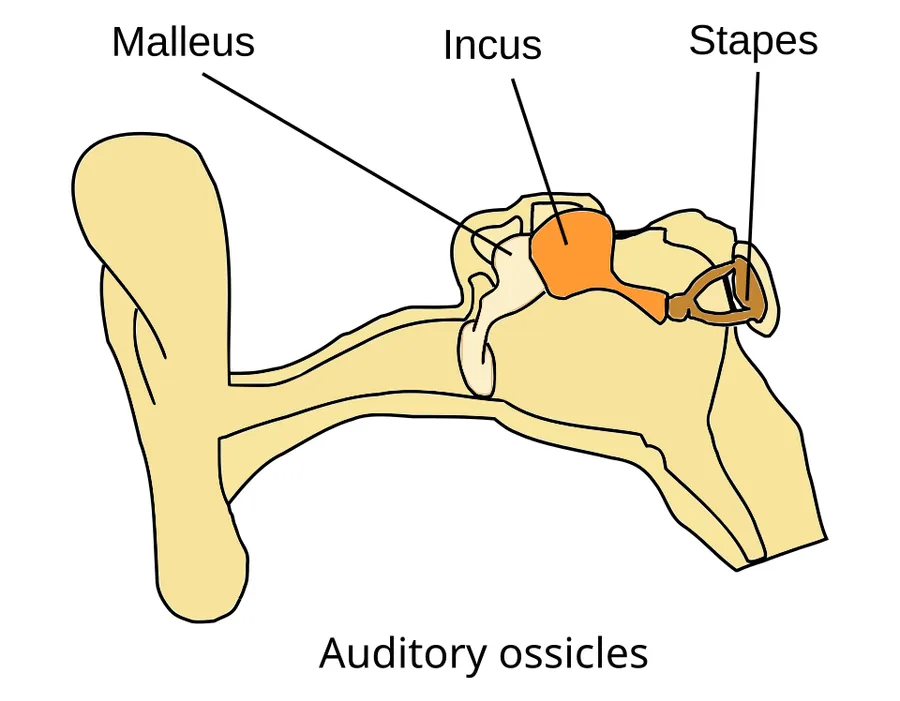
The incus (pl.: incudes) or anvil in the ear is one of three small bones (ossicles) in the middle ear. The incus receives vibrations from the malleus, to which it is connected laterally, and transmits these to the stapes medially. The incus is named for its resemblance to an anvil (Latin: incus).
Structure
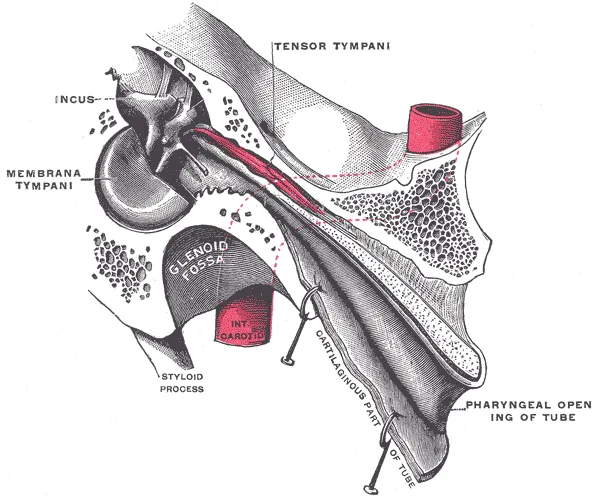
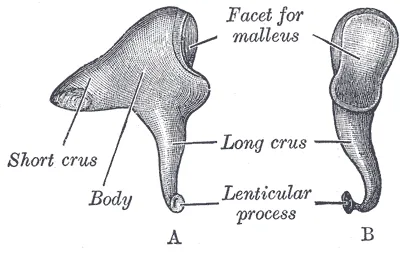
The incus is the second of three ossicles, very small bones in the middle ear which act to transmit sound. It is shaped like an anvil, and has a long and short crus extending from the body, which articulates with the malleus. The short crus attaches to the posterior ligament of the incus. The long crus articulates with the stapes at the lenticular process.
The superior ligament of the incus attaches at the body of the incus to the roof of the tympanic cavity.
The incus is homologous to the quadrate bone found in other tetrapods.
Function
Vibrations in the middle ear are received via the tympanic membrane. The malleus, resting on the membrane, conveys vibrations to the incus. This in turn conveys vibrations to the stapes.
Source: Wikipedia, The Free Encyclopedia · CC BY-SA 4.0
References
- Incus — Wikipedia, The Free EncyclopediaText from the Wikipedia article "Incus" (CC BY-SA 4.0); excerpted. Licence. Retrieved 2026-10-19. Revision used.
Text above is quoted from the listed sources without changes to its meaning. Image credits and licences are shown with each image. Educational information only, not medical advice.
Educational anatomy reference, not medical advice. About this content.