Dermis
Dermis (corium)
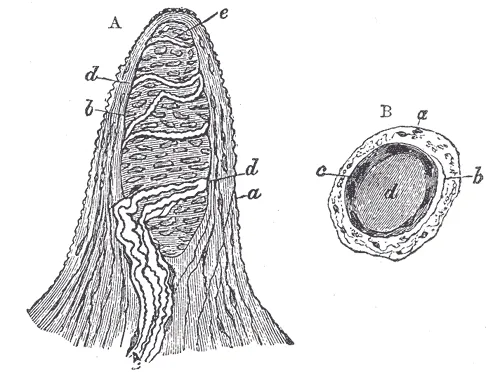
View the dermis in 3DThe dermis or corium is a layer of skin between the epidermis (with which it makes up the cutis) and subcutaneous tissues, that primarily consists of dense irregular connective tissue and cushions the body from stress and strain. It is divided into two layers, the superficial area adjacent to the epidermis called the papillary region and a deep thicker area known as the reticular dermis. The dermis is tightly connected to the epidermis through a basement membrane. Structural components of the dermis are collagen, elastic fibers, and extrafibrillar matrix. It also contains mechanoreceptors that provide the sense of touch and thermoreceptors that provide the sense of heat. In addition, hair follicles, sweat glands, sebaceous glands (oil glands), apocrine glands, lymphatic vessels, nerves and blood vessels are present in the dermis. Those blood vessels provide nourishment and waste removal for both dermal and epidermal cells.
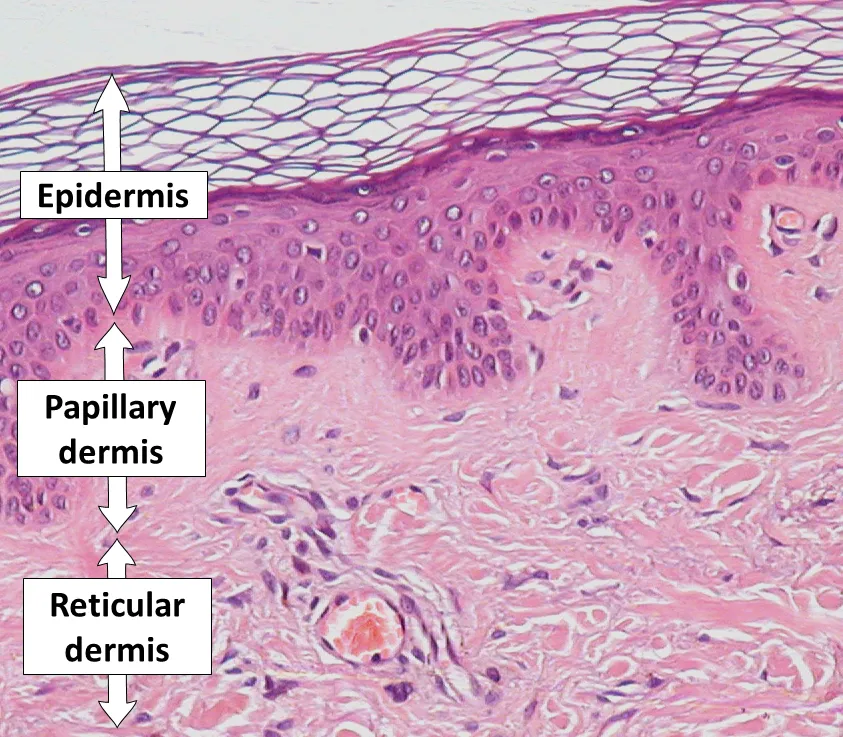
Structure
The dermis is composed of three major types of cells: fibroblasts, macrophages, and mast cells.
Apart from these cells, the dermis is also composed of matrix components such as collagen (which provides strength), elastin (which provides elasticity), and extrafibrillar matrix, an extracellular gel-like substance primarily composed of glycosaminoglycans (most notably hyaluronan), proteoglycans, and glycoproteins.
Source: Wikipedia, The Free Encyclopedia · CC BY-SA 4.0
References
- Dermis — Wikipedia, The Free EncyclopediaText from the Wikipedia article "Dermis" (CC BY-SA 4.0); excerpted. Licence. Retrieved 2026-10-19. Revision used.
Text above is quoted from the listed sources without changes to its meaning. Image credits and licences are shown with each image. Educational information only, not medical advice.
Educational anatomy reference, not medical advice. About this content.