Cephalic vein
Vena cephalica sinistra
- Paired structure: one on the left and one on the right side of the body.
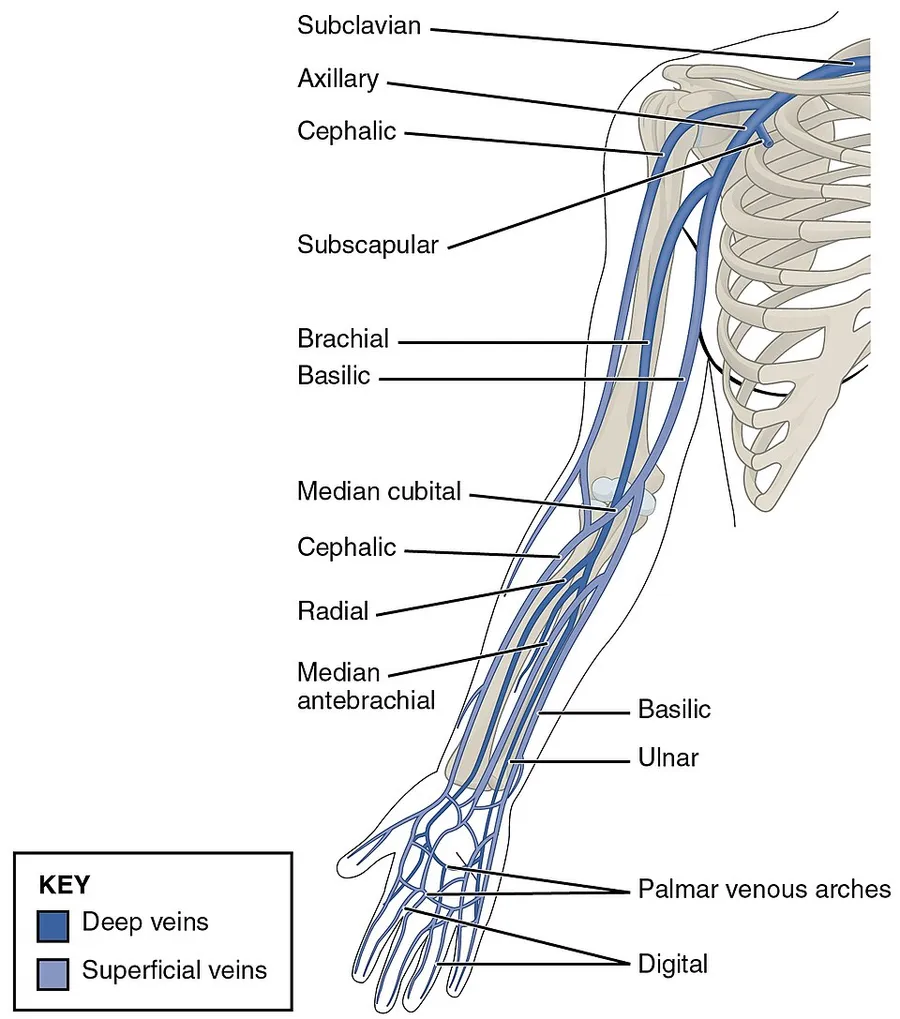
In human anatomy, the cephalic vein is a superficial vein in the arm. It is the longest vein of the upper limb. It starts at the anatomical snuffbox from the radial end of the dorsal venous network of hand, and ascends along the radial (lateral) side of the arm before emptying into the axillary vein. At the elbow, it communicates with the basilic vein via the median cubital vein. It is provided with 13 pairs of valves, of which five occur in its antebrachial portion, seven in its brachial portion, and one at its union with the axillary vein.
Anatomy
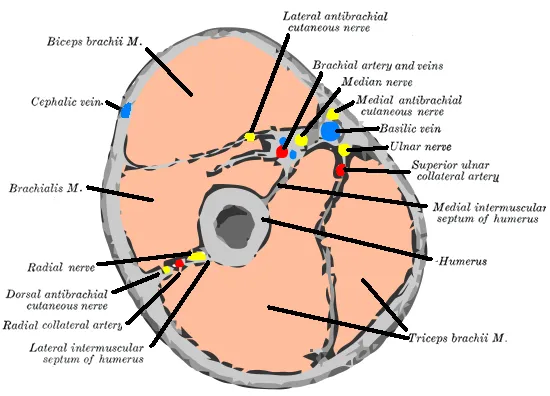
The cephalic vein is situated within the superficial fascia along the anterolateral surface of the biceps.
Origin
The cephalic vein forms at the roof of the anatomical snuffbox at the radial end of the dorsal venous network of hand.
Course and relations
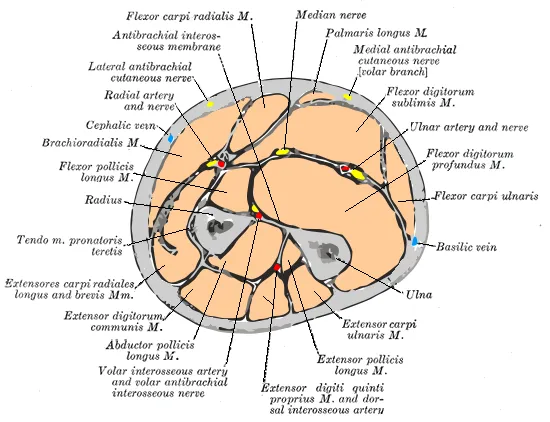
From its origin, it ascends up the lateral aspect of the radius.
Near the shoulder, the cephalic vein passes between the deltoid and pectoralis major muscles (deltopectoral groove) through the clavipectoral triangle, where it empties into the axillary vein.
Anastomoses
It communicates with the basilic vein via the median cubital vein at the elbow.
Clinical significance
The cephalic vein is often visible through the skin, and its location in the deltopectoral groove is fairly consistent, making this site a good candidate for venous access. Permanent pacemaker leads are often placed in the cephalic vein in the deltopectoral groove. The vein may be used for intravenous access, as large bore cannula may be easily placed. However, the cannulation of a vein as close to the radial nerve as the cephalic vein can sometimes lead to nerve damage.
Source: Wikipedia, The Free Encyclopedia · CC BY-SA 4.0
References
- Cephalic vein — Wikipedia, The Free EncyclopediaText from the Wikipedia article "Cephalic vein" (CC BY-SA 4.0); excerpted. Licence. Retrieved 2026-10-19. Revision used.
Text above is quoted from the listed sources without changes to its meaning. Image credits and licences are shown with each image. Educational information only, not medical advice.
Educational anatomy reference, not medical advice. About this content.